Loading...

How to build a stronger identity framework in a multi-signal world

Published: January 9, 2026 by Henry Schenker, Group Product Manager

At A Glance

The challenge facing marketers today is not the decline of a single identifier, but the fragmentation of signals across browsers, devices, apps and platforms. A resilient identity framework unifies these signals into a consistent, privacy-safe view of the consumer, allowing marketers to reach, measure and optimize across environments that expose different identifiers.

Why an identity framework matters more than any single identifier

The challenge facing marketers today isn’t a single identifier on a deprecation timeline; it’s the increasing fragmentation of signals and identifiers across browsers, devices, apps, and platforms. This shift introduces complexity into how audiences are reached and measured, as signals behave differently in every environment, and it becomes more complex to piece together a complete view of the consumer.
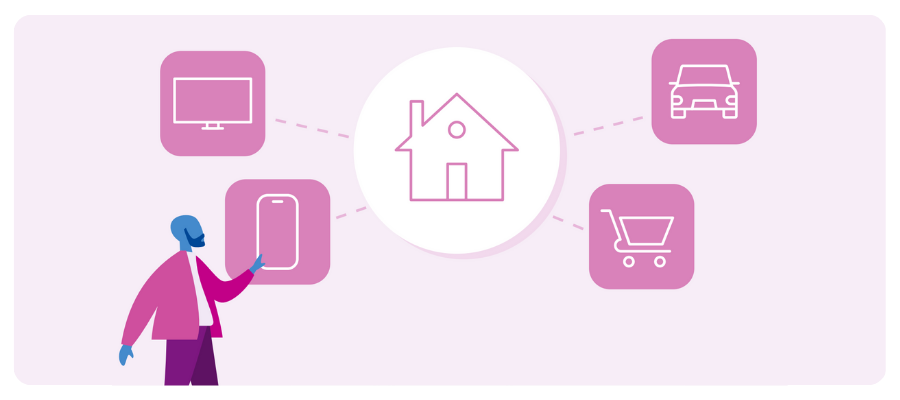
An icon of a house in the center with icons around it that represent a TV, mobile phone, shopping cart, and car with a man on the bottom left-hand side.

Each environment contributes to its own set of visibility gaps, making identity less predictable and more uneven. The result is a patchwork of inconsistent identity signals rather than a single, predictable decline.

While you can’t control how platforms evolve, you can control how you respond to fragmentation. The future won’t be defined by the loss of any single identifier, but by your ability to unify, interpret, and activate the many signals that remain. Marketers who adopt a flexible, identity framework will be best positioned to create consistency in an otherwise fragmented landscape.

At Experian, we believe flexibility starts with intelligence. For decades, we’ve used AI and machine learning to help marketers understand people’s behavior more clearly, respect their privacy, and deliver messages that drive business outcomes. Our technology brings identity, insight, and intelligence together, so even as the number of signals grows and becomes more varied across environments, marketers can reach the right people with relevance, respect, and simplicity. This intelligence acts as the connective tissue across fragmented ecosystems, ensuring marketers can recognize and reach audiences consistently wherever they appear.

What forces are driving fragmentation in identity and signals?

Changes to traditional IDs

Since Apple introduced App Tracking Transparency (ATT), access to the Identifier for Advertisers (IDFA) has become inconsistent across apps and devices. Google’s evolving Android privacy roadmap adds another layer of variability, fragmenting mobile addressability. Safari and Firefox have long restricted third-party cookies, while Chrome continues to support them for now. This creates different signal availability across browsers, contributing to an uneven and increasingly fragmented identity landscape on the open web.

Shifts in signals

IPv4 to IPv6 migration introduces mismatched identity structures that complicate continuity across environments.

Platform-driven fragmentation

Closed ecosystems and uneven adoption of evolving RTB standards (like OpenRTB 2.6 updates designed to support new identifiers and consent signals) create differences in which identifiers and consent signals are shared in the bidstream. At the same time, the rise of alternative or “universal” IDs—often developed by individual platforms, publishers, or technology companies—means that multiple ID types can appear within the same auction, each with its own structure, rules, and level of support. These differences reduce interoperability across platforms and contribute to a more fragmented activation landscape.

Each change creates an identity silo. Together, they form an ecosystem defined by fragmentation rather than absence. Without an identity framework, these environments operate as disconnected identity islands.

A multi-ID world requires a unified identity framework

Alternative IDs play an important role, but they also expand the number of signals marketers must reconcile. Without a consistent identity layer, more IDs often mean more complexity—not more clarity. Common alternative IDs in use today:

  • UID2: The Trade Desk’s Unified I.D. 2.0, an iteration of their original Unified ID 1.0, which was still reliant on third-party cookies, creates persistent IDs with user-provided email addresses and phone numbers.
  • ID5: This independent identity provider builds an identity infrastructure that powers addressable advertising across channels. It can create an ID based on both deterministic and probabilistic data.
  • Hadron ID: Hadron ID is a unique, interoperable identity system (including first-party, audience-based, contextual, deterministic, and probabilistic) developed by Audigent, now part of Experian, to drive revenue for publishers by making their audience data and inventory actionable for media buyers.

Industry reports suggest roughly one-third to two-fifths of open-auction traffic carries alternative IDs, sometimes multiple per request. Among Experian clients, adoption of alternative IDs rose 50% year over year, with a 30% increase in IDs resolved to individuals via our Digital Graph.

Identity isn’t disappearing; it’s multiplying. A modern identity framework resolves these identifiers into a single, privacy-safe consumer view.

Why CTV makes an identity framework essential

Beyond alternative IDs, device-level identifiers also play a major role in today’s ecosystem and add to the fragmentation marketers must navigate. Connected TV (CTV) environments introduce additional fragmentation.

CTV IDs

A CTV ID is an identifier used to deliver, target, and measure ads on CTV devices, including smart TVs, streaming devices, gaming consoles, and more. Unlike MAIDs, which act as universal device identifiers across apps, CTV environments often generate multiple, platform-specific IDs for the same physical device. Different operating systems, publishers, or streaming platforms may each assign their own identifier—such as Roku ID for Advertisers, Amazon Fire Advertising ID, Samsung TIFA, or Apple IDFA for CTV. As a result, a single household or TV can appear under several distinct IDs, making cross-app or cross-platform recognition more complex and further reinforcing the need for a unified identity framework.

Experian’s identity framework is powered by predictive and generative intelligence that makes resolution faster and more human-centered. Our AI models fill gaps where data signals are missing, infer behaviors responsibly, and continuously optimize for accuracy, so marketers can personalize ads responsibly, even in a fragmented ecosystem. More importantly, our framework normalizes signals across disconnected environments, creating a consistent identity spine that follows the consumer through their fragmented digital journey.

An identity framework connects online and offline signals

Fragmentation extends beyond digital environments. Marketers manage offline data from in-store transactions, loyalty programs, household identifiers, and phone numbers that rarely align cleanly with digital signals.
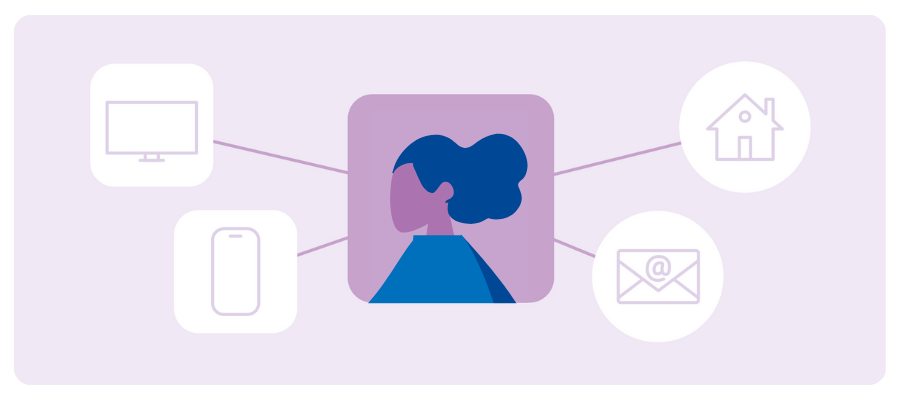
An icon of a woman in the center with icons around her for TV, mobile phone, email, and home.

As consumers move between online and offline touch points, an identity framework connects these signals into a coherent view of the individual. This foundation allows marketers to recognize the same consumer across environments that expose different identifiers.

Four keys to future-proofing your media with an identity framework

1. Know your customer: Unify and enrich your first-party data

First-party data is a marketer’s most durable asset, but it’s often scattered and incomplete.

  • Unify it: Bring CRM records, site interactions, and loyalty data into a single platform to build a holistic customer view. Use Offline Identity Resolution to resolve your first-party offline personally identifiable information (PII) back to a consolidated consumer profile, removing duplication of users in your data set.
  • Enrich it: Append Experian Marketing Attributes to uncover demographics, lifestyle markers, and purchase behaviors you can’t see on your own, and use Offline Identity Append to fill in missing offline data points (such as name, address, phone, etc.) to create a more complete and actionable customer profile.
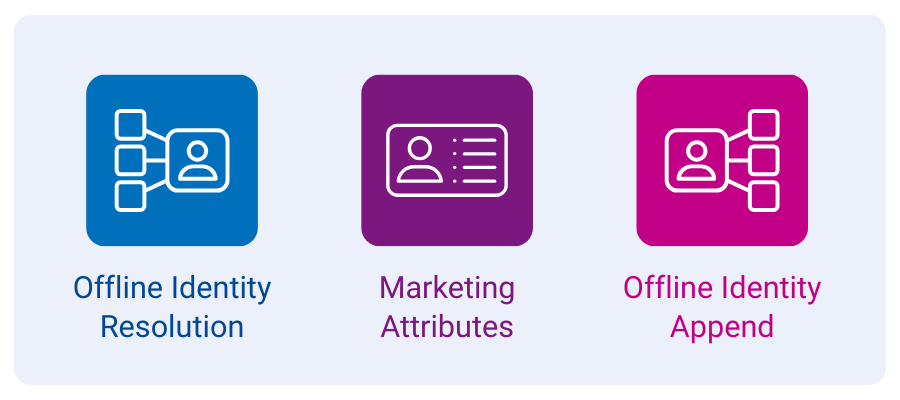
Experian's Offline Identity Resolution, Marketing Attributes, and Offline Identity Append

This gives you richer profiles that drive more personalized targeting and messaging. Fragmented ecosystems make unified first-party data even more essential. A connected view allows marketers to anchor identity against a stable, proprietary foundation. As identifiers vary across environments, marketers need flexible, privacy-first ways to understand where their audiences are and how to reach them.

2. Find your customer: Expand how you discover and reach audiences in a fragmented landscape

As identifiers vary across environments, marketers need flexible, privacy-first ways to understand where their audiences are and how to reach them.

  • Contextual signals: Experian’s Contextually-Indexed Audiences map content to consumer insights, so you can target intent-rich environments.
  • Geographic insights: Our Geo-Indexed Audiences help you find regions that over-index for specific traits and activate them across your preferred platforms.
  • Syndicated and Partner Audiences: Choose from 3,500+ prebuilt segments or 30+ partner data sources spanning health, retail, travel, and more.
  • Curation: As a full-service curation partner, we enable private marketplace (PMP) deals that are privacy-safe, identity-agnostic, and performance-optimized.
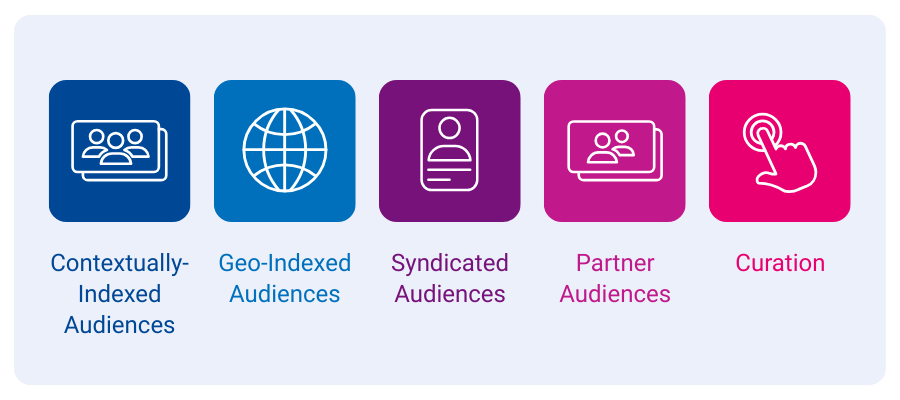
Icons that represent Experian's Contextually-Indexed Audiences, Geo-Indexed Audiences, Syndicated Audiences, Partner Audiences, and Curation.

Together, these approaches help you confidently reach your audiences – using multiple types of signals that complement your identity strategy and create a clearer picture across fragmented environments.

3. Reach your customer: Maximize scale through interoperability

As signals and identifiers proliferate across environments, interoperability is essential to maintain consistent reach. Experian’s Offline and Digital Graphs unify disparate signals (MAIDs, CTV IDs, alternative IDs, IP, and more) so marketers can recognize and engage audiences reliably across channels, devices, and platforms.
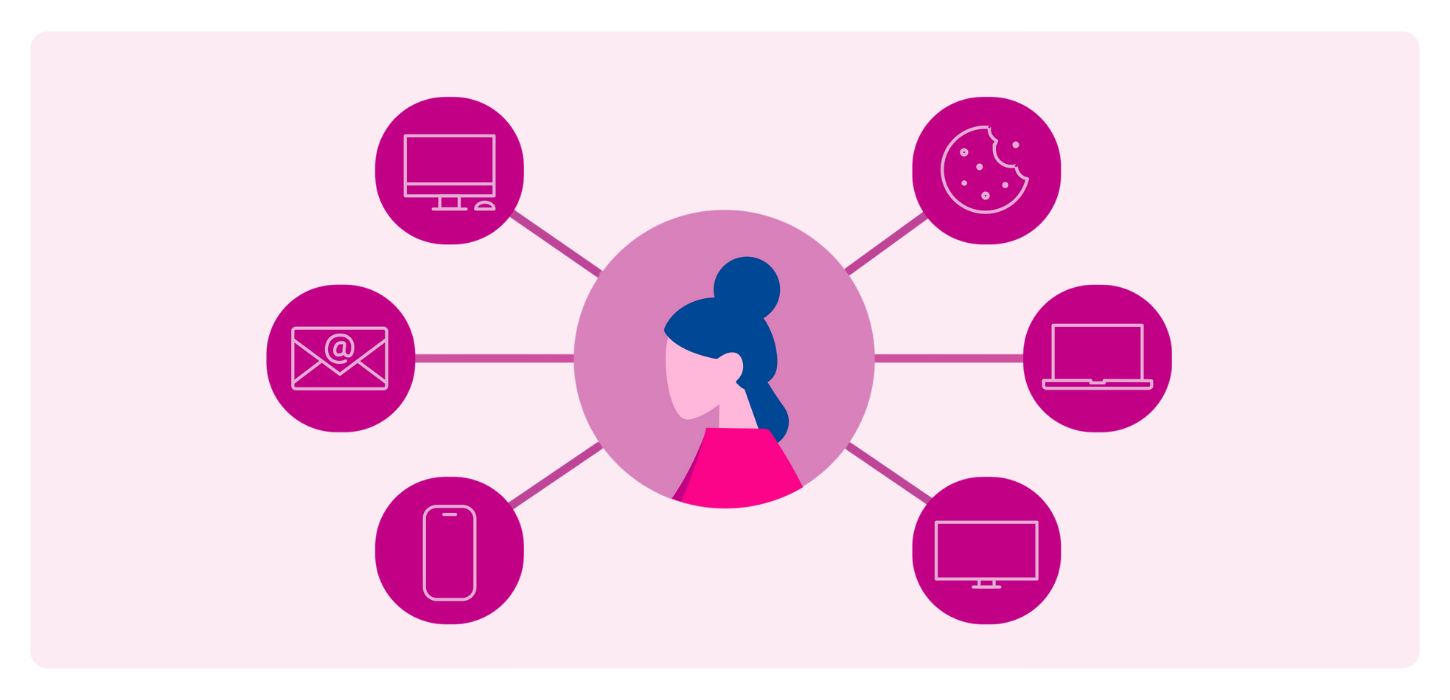
An icon of a woman in a center circle with different cirlces around her with icons for a desktop computer, email, mobile phone, TV, laptop, and cookie.

Interoperability matters because it turns a collection of disconnected identifiers into a coherent identity framework that can actually be activated. The following capabilities demonstrate how that comes to life.

  • Unified identity: Create a consistent view of your audience, even when different environments expose different identifiers. Experian’s identity framework connects these signals into a single, actionable identity spine.
  • Expanded reach: OpenX enriched its supply-side identity graph with Experian’s audiences, making our data available directly across OpenX supply and formats. By matching more of the starting audience and identifying more users in the bidstream, marketers see higher match and activation rates, extending reach in hard-to-address environments like Safari and mobile web.

Measure success: Optimize based on outcomes

If you can’t measure your marketing, you can’t improve it. Experian Outcomes, powered by our holistic understanding of the user across online and offline touch points, closes the loop by connecting media exposures to real-world actions (store visits, purchases, or site conversions).

An icon of a person with graphs and charts on their left and right sides.

With these insights, you can:

  • Prove ROI across digital and TV
  • Attribute success to the right channels and tactics
  • Continuously refine targeting, creative, and spend allocation

Outcome-based measurement makes your strategy adaptive, so dollars flow to what drives results.

As signals multiply across environments, connecting exposures to outcomes requires a unified identity foundation. Experian closes the loop by unifying exposures across disconnected touch points, enabling holistic attribution and optimization. Our AI-powered simplicity drives continuous improvement. From predictive modeling to agentic workflows that automate optimization, we’re investing in generative AI to help marketers spend less time on manual setup and more time on strategy and outcomes.

The Experian identity framework advantage

Experian connects fragmented signals into a single, actionable identity framework built for long-term resilience.

What our identity framework delivers

  • Interoperability: We support all major identifiers, including alternative IDs, IP address (v4 and v6), contextual signals, and both first- and third-party data.
  • Flexibility: Whether you’re activating syndicated audiences, tapping into partner audiences from 30+ data providers, or curating custom segments through Audigent, our solutions meet you where you are.
  • Scale: With four billion IDs resolved in our Digital Graph and 280 million telephones in our Offline Graph, we deliver unmatched reach across digital and offline environments.
  • AI that makes marketing more human: We bring together identity, insight, and automation through responsible AI, helping marketers see audiences clearly, act with intelligence, and optimize with respect for privacy.

Our approach is delivering results across a range of programmatic players. These outcomes demonstrate how a unified identity framework delivers performance in environments where signals, identifiers, and devices operate in silos.

Proven results powered by Experian’s identity framework

  • Sonobi increased programmatic addressability across the mobile web by 25% and delivered a 20% lift in impression value through our identity graph, driving stronger campaign connections and greater publisher returns.
  • One DSP used our Digital Graph to match more MAIDs, CTV IDs, and IP addresses to online conversions, enabling increased accuracy of their attribution and measurement. They achieved an 84% synced ID rate and a 9% increase in match rate.
  • For Cuebiq, we significantly increased match rates and resolved data from cookieless environments, such as Safari. By combining separate data streams and resolving 85% of total events to a household, Cuebiq expanded on the household IDs to identify MAIDs that are observed in-store, enabling accurate cross-channel measurement.
  • Our Digital Graph allowed MiQ and their clients to expand the reach of their seed audiences across devices by 51% and cookieless IDs by 64%. As a result, MiQ can provide marketers with future-proofed connected planning, advanced targeting, and precise measurement.

We’re your partner in building identity framework that lasts: resilient to change, adaptive to new signals, and focused on outcomes.

What comes next for signals and identity?

The future isn’t defined by any single identifier. It’s defined by the ability to unify and activate across a fragmented identity ecosystem. The winners will be those who adopt interoperable, outcome-driven identity frameworks today.

Those strategies will increasingly be powered by responsible AI, systems that simplify workflows, predict opportunity, and optimize in real time while keeping people at the center. At Experian, we see AI not as automation for its own sake, but as a way to make marketing more human, relevant, and respectful.

Your playbook for navigating fragmentation

Experian connects the fragmented identity ecosystem, unifying alternative IDs, IP signals, contextual data, and first- and third-party assets into a consistent, actionable identity foundation. With proven lift across partners like Sonobi and new offerings like Contextually-Indexed Audiences, we help you build campaigns that perform in a fragmented landscape.

Download our 2026 Digital trends and predictions report to explore how identity, interoperability, and measurement will define the future of advertising.


About the author

Henry Schenker, Group Product Manager, Experian

Henry Schenker

Group Product Manager, Experian

Henry has nearly 15 years of experience in Digital Advertising, Social Media Marketing, Data Licensing & Analytics, Front-End Engineering, Technical Architecture & Integrations, Profit & Loss Management, and Enterprise-Level Contract Negotiation across the U.S., EMEA, and Asia Pacific regions.

Prior to re-joining Experian, Henry held critical go-to-market and product roles at noted industry-disruptors Media.Monks and Attain. From 2018 – 2020, he served as the Vice President, APAC of Innovid (now publicly traded, NYSE:CTV), leading the company’s expansion into Japan, Singapore, and Australia. The preceding 4 years with Tapad (acquired by Experian), allowed Henry to become a seasoned Sales Engineer, grow and lead a global Technical Integrations team, and relocate to Singapore, leading sales and operations in the APAC region. Before beginning his career and learning front-end engineering on-the-job at Wyng (formerly Offerpop), Henry received a dual-major (BA/BS) in Sociology and Economics & Finance from Bard College in New York.


FAQs

Why is signal and identity fragmentation increasing across digital and offline channels?

Signal and identity fragmentation is increasing across digital and offline channels because consumers now engage across more devices, platforms, and environments. Each environment introduces its own identifiers and privacy rules. This growth creates more signals overall, which increases the need for unification rather than reliance on a single ID.

How should marketers think about alternative IDs in a multi-signal ecosystem?

Alternative IDs add reach and coverage when they connect through a common identity framework. They work best alongside first-party data, device identifiers, and contextual signals. Resolution turns multiple IDs into one consistent view of the consumer.

What role does unified identity play in CTV and cross-device media?

CTV environments often assign multiple platform-specific identifiers to the same household or device. A unified identity layer links those identifiers together. This approach supports consistent audience recognition across streaming apps, devices, and digital channels.

How does unified identity support accurate measurement and attribution?

Unified identity connects media exposure to outcomes across digital, TV, and offline touch points. It enables marketers to see how different channels contribute to real actions like visits or purchases. Measurement improves when identity remains consistent across the full journey.

Why does an identity strategy matter beyond digital advertising?

Identity extends into offline signals such as transactions, loyalty activity, and household data. A unified foundation aligns online and offline interactions into one coherent profile. This connection supports planning, activation, and measurement across the entire customer experience.


Latest posts
Loading…
What is direct response TV (DRTV)?

Suppose you're watching your favorite TV show, and an ad suddenly catches your attention. It urges you to take immediate action, whether to call a number, visit a website, or text a keyword like ‘DETAILS’ to a specific number for more information. This is direct response television (DRTV), a powerful form of advertising available on all TV types — including live, cable, and streaming — that directly connects brands with consumers to drive immediate engagement and measurable results. The goal of DRTV marketing is simple: convert viewers into customers quickly and measurably by asking them to do something in real time. Every DRTV ad is carefully designed to drive quick conversions with a clear, direct path from interest to action. This makes it an essential tool for marketers who need to measure their return on investment (ROI) for TV and see instantaneous results. Key benefits of DRTV marketing Unlike traditional TV ads that build long-term brand awareness, DRTV campaigns are focused on driving instant results and are surprisingly effective at doing it. Here are a few benefits of DRTV and why it’s a powerful tool for marketers in a digitized world. Immediate customer engagement One of the biggest advantages of DRTV is its ability to engage customers right off the bat. DRTV grabs attention and motivates people to act now, whether with a phone number on the screen, a QR code to scan, or a limited-time offer, often with compelling incentives. Measurable ROI DRTV is designed to deliver precise, trackable results. Because the ads encourage specific actions — like visiting a website or calling a phone number — it’s easy to see what’s working and what’s not. Marketers can measure everything from sales to lead generation, which guides them in refining their strategies for even better results. Pairing DRTV with digital tools, like web analytics or CRM systems, can provide even deeper campaign performance insights. Broad reach Even in the streaming age, live TV and cable still attract millions of viewers, which makes DRTV excellent for brands needing to expand their reach. Marketers can even tailor DRTV ads to specific audiences by choosing the best time slots on the proper channels. Whether you’re targeting parents watching morning news or sports fans tuning into big games, you’ll know you’re connecting with the right people at optimal times. Types of DRTV ads DRTV advertising offers several formats, each suited to different audiences, budgets, and goals, whether you’re introducing a new product or driving traffic to your website. Infomercials Infomercials are the classic, long-form DRTV ads that most people associate with the term. These ads typically run for 15-30 minutes and go into detail on product benefits and features. They often include demonstrations and special offers to educate and engage viewers with urgent, limited-time deals. Think of the iconic “But wait, there’s more!” ads used to sell everyday items ranging from household cleaners to exercise equipment. Short-form ads Short-form DRTV ads are 30-second to 2-minute ads that get straight to the point with a single message or offer and a clear call-to-action (CTA) to encourage immediate engagement. Short-form ads are ideal for quick bursts of information, like promoting a flash sale or highlighting a new product. A 60-second ad showcasing a new mobile app might feature a quick walkthrough of its features, followed by a QR code or website URL to download it instantly. Product demos Some DRTV ads focus exclusively on demonstrating how a product works in real-life scenarios. These ads are great for showing off unique features or solving familiar pain points that make the product feel essential. A cookware brand might show how its nonstick pans make cooking and cleanup a breeze while including a CTA to “order now and get a free bonus spatula!” Testimonials Testimonials from real customers or experts are a great way to build trust and credibility.  Hearing someone’s success story or endorsement of a product or service can help viewers feel confident about their purchase decision. A skincare brand, for example, might air a two-minute ad of a dermatologist explaining the science behind the product, along with five-star reviews from satisfied users. Call-in contests or limited-time offers This type of DRTV ad creates urgency by promoting a special offer or giveaway. Viewers might have to call a number or visit a website within a specific timeframe to claim the deal. For example, travel agencies sometimes air ads offering free vacations or planning kits to the first 100 callers, which helps them generate immediate leads. Hybrid ads with digital integration Many modern DRTV campaigns blend traditional TV with digital tools, like QR codes, social media hashtags, or links to custom landing pages. These hybrid ads meet viewers wherever they are. A fitness program might air a short-form ad with a QR code linking to their free app trial, making it easy for viewers to instantly engage. Success tips for DRTV advertising Creating a successful direct response TV campaign centers on messaging that resonates with the right audience, inspires action, and delivers measurable results. Here are some essential tips for a winning DRTV strategy. Strong CTA Every DRTV ad should include a compelling, straightforward CTA that motivates viewers to act immediately. Whatever it is, your CTA should be easy to understand and time-sensitive to create urgency, such as, “Claim this limited-time offer in the next 30 minutes!” Multi-channel integration Direct response TV works best when part of a broad multi-channel strategy, so you should make sure your campaign integrates well with digital channels. This can reinforce your message, help consumers engage across platforms, and drive better results. Audience targeting Precise audience targeting is critical to DRTV campaign success. Experian’s advanced TV audiences, developed with the Advertising Research Foundation (ARF), help you connect with the right viewers to drive immediate action. These syndicated audiences are now available on FreeWheel, the TV advertising industry’s global tech platform. With over 2,400 ready-to-use audience segments, Experian enables you to target specific groups, such as: TV viewership audiences: Target households based on viewing habits and preferred devices. In-market car buyers: Reach consumers actively searching for their next vehicle, which is ideal for driving sales. Holiday shoppers: Engage gift-givers, deal-seekers, and travelers during peak shopping seasons. New TV audiences released in August 2024 In addition to these, our August 2024 release introduced several updates that further refine Experian’s targeting capabilities. Some of the audience updates in this release included: New retail transaction audiences: These segments offer insights into categories like children’s products, parenting, hobbies and crafts, science and nature, and sports and fitness. With high spending and frequent purchase behaviors, these audiences provide a deeper understanding of consumer preferences. Notable segments include: Sports and fitness high spenders Children’s product high spenders Science and nature high spenders Updated TV audiences: New and refreshed TV segments now reflect the viewing habits of today’s consumers for accurate insights and targeting. Examples of newly added segments include: Free and paid ad-supported streaming TV subscribers Satellite service subscribers Cable and streaming TV service subscribers With these advanced targeting capabilities, your DRTV campaigns can be more effective and resonant with viewers most likely to respond for maximum ROI and engagement. Effective planning A strong DRTV campaign starts with defining your objectives, budgeting effectively, and identifying the right media mix. Understanding where your audience spends their time — prime-time TV or niche cable channels — will get you the most value from your DRTV investment. Real-time tracking Tracking your DRTV campaign’s performance in real time is critical for success. Tools that provide immediate insights into viewer responses, website visits, or call volumes allow you to identify what’s working and pivot quickly if needed. Measuring success Measuring success against key performance indicators (KPIs) like conversion rates, ROI, or cost-per-acquisition (CPA) is an excellent way to know if your DRTV campaign is delivering results. Experian’s advanced data solutions make tracking and analyzing campaign performance easier, so you can make data-informed decisions and deliver precise results to stakeholders. Continuous optimization DRTV marketing is an ongoing effort. Use the insights from real-time tracking and performance measurement to refine your strategy. Optimization keeps your campaign relevant and effective, whether you need to tweak your CTA, adjust your audience targeting, or test new creative formats. How DRTV relates to advanced TV and connected TV While DRTV has historically focused on immediate viewer actions via traditional linear TV, it’s found new relevance within advanced TV and connected TV (CTV) ecosystems. These modern formats expand the measurable, action-driven qualities of DRTV while incorporating the precise targeting and personalized storytelling made possible by digital technologies. DRTV and advanced TV Advanced TV enhances DRTV by enabling addressable advertising, which helps marketers deliver ads to specific households based on behavioral or demographic data. For instance, using tools like Experian’s Graph, advertisers can integrate data sets across multiple sources to refine audience segmentation and tailor messages to individual households.  Advanced TV also supports cross-channel consistency to provide a unified customer experience whether the viewer engages with linear TV, streaming services, or other devices. Additionally, programmatic ad buying plays a role in automating the ad-buying process. This helps advertisers optimize their bids and placements and get DRTV campaigns in front of the right audience at the right time, which maximizes cost-efficiency across both traditional and digital channels. DRTV and CTV CTV has a high rate of logged-in, authenticated viewers and provides a lot of helpful first-party data. This allows for hyper-precise audience targeting, cross-device attribution, and an ability to link ad exposure to conversions — even when purchases occur on non-CTV devices. Universal IDs like UID2 further strengthen these capabilities by creating consistent and privacy-respecting user identities across platforms. Experian’s TV partnerships Through partnerships with leading CTV players like Madhive, Samsung, Disney/Hulu, and others, Experian’s identity solutions integrate seamlessly to support well-timed, personalized ads across major streaming platforms. These integrations, powered by our Digital and Offline Graphs, offer a complete view of audiences to enable more controlled, effective activation across mediums, including free ad-supported streaming television (FAST) channels. Using Experian’s advanced data and identity tools, advertisers can tap into the full potential of DRTV strategies within advanced TV and CTV to make campaigns more actionable, efficient, and impactful. The future of DRTV So, what is DRTV going to look like in the future? With the integration of digital and television platforms, DRTV is becoming more targeted, interactive, and personalized. This shift creates new opportunities for advertisers to drive conversions. Here are some key advancements that will continue to shape the future of DRTV: Addressable TV: Advertisers can deliver targeted ads to specific households based on demographic and behavioral data. It uses data from smart TVs, streaming devices, and third-party data providers to enable highly relevant ads based on the interests of individual viewers. Interactive TV ads: Interactive TV ads enable viewers to engage directly with the content through their remote control or mobile devices. Users can click on a product for more information or make purchases without leaving the TV screen and immediately convert. Authenticated audiences: With CTV and AI technology, advertisers can use first-party data from authenticated users to improve targeting, measurement, and campaign performance. Advertisers can create a more cohesive and personalized experience by linking viewers across multiple devices, which improves ad effectiveness and attribution. Branded apps with saved information: Branded apps that store payment and personal information streamline the direct response process. These apps reduce purchase journey friction and allow quicker conversions, as viewers can complete transactions with fewer steps. QR codes replacing URLs: QR codes are becoming a popular alternative to traditional URLs in DRTV ads. These codes provide a quick, convenient way for viewers to visit a website, access a product page, or act on a CTA simply by scanning the code with their phone. Better targeting algorithms: Advancements in targeting algorithms allow advertisers to serve more personalized and relevant ads. These algorithms help ads reach the right audience at the right time, which can increase engagement and conversion rates. These innovations offer advertisers more tools to connect with audiences in a personalized, interactive, and measurable way. Connect with Experian’s TV experts Experian can help you achieve the full potential of your direct response TV advertising efforts with our advanced tools, precise audience targeting, and strong industry partnerships. We help brands create impactful DRTV campaigns that drive real-time engagement, audience connection, and measurable results, whether for traditional, advanced, or CTV. Reach out today to work with us on your DRTV efforts and achieve better ROI, or explore how our expertise can transform your TV advertising campaigns. Connect with our TV experts Contact us Latest posts

Jan 09,2025 by Experian Marketing Services

Score a touchdown with Experian’s football audience playbook

The stakes are high when it comes to advertising during football’s biggest games as the cost of advertising continues to rise, with the average 30-second TV ad during the 2023-24 Sunday Night Football season priced at $882K. With record viewership at the College Football Playoff and the Super Bowl drawing in 123.7 million average viewers, the largest TV audience on record, it's no surprise that brands are willing to pay those prices since football games are prime time for reaching engaged audiences. In fact, an estimated 51% of viewers search for an ad they saw during the game, underscoring the potential of second-screen engagement to amplify campaign impact. Whether you advertise on TV during these games or not, brands are exploring how they can use football season to drive a deeper connection to their audience. To do this, brands need data driven strategies. In this blog post, we’ll reveal audience segments designed for you to craft tailored marketing strategies that resonate with football fans in the stands and on the couch. You can find the complete audience segment name in the appendix. Make a game-winning play with Experian Audiences With playoff season fast approaching, it’s the perfect time to go on the offensive and target football fans. Utilize Experian’s syndicated audiences to ensure your marketing messages resonate with fans when they're the most engaged. Experian’s 2,400+ syndicated audiences are available directly on over 30 leading television, social, programmatic advertising platforms, and directly within Audigent for activation within private marketplaces (PMPs).   Reach consumers based on who they are, where they live, and their household makeup. Experian ranked #1 in accuracy by Truthset for key demographic attributes. Access to unique audiences through Experian’s Partner Audiences available on Experian’s data marketplace, within Audigent for activation in PMPs and directly on platforms like DirectTV, Dish, Magnite, OpenAP, and The Trade Desk.  Four football audience categories to add to your advertising lineup Football fans come in all shapes, sizes, and viewing habits. From dedicated supporters to casual viewers, targeting the right audience can make or break your campaign. Here are four football audience categories you can target: Sports enthusiasts College football fans  21+ audiences TV viewers Let’s huddle up and break down the audience segments within each category. Whether it’s tailgating, tuning in, or cheering from the stands, these insights will get your campaign into the end zone. Sports enthusiasts Whether they’re following their favorite teams, attending games in person, or watching professional sports events on TV, football fans are deeply engaged, making them an ideal target for advertisers looking to score big. Here are five audiences to target: NFL Enthusiasts Football (FLA/Fair Lending Friendly)1 Sports Enthusiasts NFL Stadium Visitors Professionals Sports Event College football fans College football fans bring unmatched passion and loyalty, with bowl games during the 2023 season drawing on average of 4.6 million viewers across 40 total games—a 5% increase year-over-year. From students to alumni, these fans represent an invaluable opportunity for advertisers to connect with a deeply invested audience. Here are four audiences to target to connect with passionate college football fans: College Football Stadium Visitors College Football Bowls College Students College Sports Venues 21+ audiences With 84% of U.S adults reporting that they drink alcohol while watching football on TV, targeting 21+ audiences during game season is a winning play. Whether they’re cracking open a cold one at a tailgate, hosting a game-day party, or relaxing on the couch, these audiences represent a key audience for brands looking to tap into football culture. Here are four audiences that you can target this post season: Imported Light Beer Enthusiasts  Domestic/Imported Beer  High-end Spirit Drinkers Discretionary spend: Alcohol and wine $331 – $726 These audiences can help you serve up campaigns that pour directly into the heart of football fandom. TV viewers Football games attract some of the most engaged and diverse TV audiences, with 85% of sports fans preferring to watch live sports on TV rather than in-person. Notably, for the first time, viewers aged 18 to 49 spent the majority of their sports viewing time (54%) via streaming. This shift highlights the immense opportunity for advertisers to connect with highly attentive viewers tuned into every play. Here are seven audiences that you can use to create a game-winning strategy to reach engaged TV watching football fans:   Cable Satellite or Streaming Network Subscribers  Streaming Video: High Spenders Cord Cutters  Cable and Streaming TV Service Subscribers  Paid TV High Spenders  Screen Size – Large  Co-Watchers Whether they're catching the action on a large TV screen or streaming from their phone, these audiences will help you craft campaigns that deliver results with highly engaged viewers. Score big with Experian this postseason As some of football’s biggest games approach, it’s time to huddle up and connect with consumers who live for the thrill of the game. Whether they’re tuning in to cheer for their favorite teams, tailgating with friends, or enjoying the game-day experience from home, Experian Marketing Data provides the playbook to score big with targeting, enrichment, and activation. With Experian’s data-driven insights, you can turn every opportunity into a game-winning play! Need a custom audience? Reach out to our audience team and we can help you build and activate an Experian audience on the platform of your choice. Additionally, work with Experian’s network of data providers to build audiences and send to an Audigent PMP for activation.  Connect with our audience team Connect with us You can activate our syndicated audiences on-the-shelf of most major platforms. For a full list of Experian’s syndicated audiences and activation destinations, download our syndicated audiences guide. Explore our other seasonal audiences that you can activate today. View now 1 “Fair Lending Friendly” indicates data fields that Experian has made available without use of certain demographic attributes that may increase the likelihood of discriminatory practices prohibited by the Fair Housing Act (“FHA”) and Equal Credit Opportunity Act (“ECOA”). These excluded attributes include, but may not be limited to, race, color, religion, national origin, sex, marital status, age, disability, handicap, family status, ancestry, sexual orientation, unfavorable military discharge, and gender. Experian’s provision of Fair Lending Friendly indicators does not constitute legal advice or otherwise assures your compliance with the FHA, ECOA, or any other applicable laws. Clients should seek legal advice with respect to your use of data in connection with lending decisions or application and compliance with applicable laws. Appendix Sports enthusiasts Lifestyle and Interests (Affinity) > Activities and Entertainment > NFL Enthusiasts  Lifestyle and Interests (Affinity) > Sports and Recreation > Sports Enthusiast   Mobile Location Models > Visits > NFL Stadium Visitors   Lifestyle and Interests (Affinity) > Sports > Football (FLA / Fair Lending Friendly)2 Travel Intent > Activities > Professional Sports Event College sports fans Mobile Location Models > Visits > University Stadium College Football Visitor  Lifestyle and Interests (Affinity) > Sports > College Football Bowls  Mobile Location Models > Visits > College Students  Mobile Location Models > Visits > College Sport Venues   21+ audiences Lifestyle and Interests (Affinity) > Activities and Entertainment > Imported Light Beer Enthusiasts  Lifestyle and Interests (Affinity) > In-Market > Domestic/Imported Beer  Lifestyle and Interests (Affinity) > Retail > High-end Spirit Drinkers Financial – Analytics IQ > Discretionary Spend > Alcohol and Wine: $331-$726 TV viewers Television (TV) > Household/Family Viewing > Cable Satellite or Streaming Network Subscribers Retail Shoppers: Purchase Based > Entertainment > Streaming/Video/Audio/CTV/Cable TV: Streaming Video: High Spenders Television (TV) > Household/Family Viewing > Cord Cutters Television (TV) > Household/Family Viewing > Cable and Streaming Service Subscribers Television (TV) > TV Enthusiasts > Paid TV High Spenders  Television (TV) > Viewing Device Type > Screen Size – Large  Television (TV) > Household/Family Viewing > Co-Watchers Latest posts

Jan 07,2025 by Lucy Simmonds, Content Marketing Specialist

Experian’s new data marketplace enhances addressability across CTV, display, and mobile

As marketers face growing signal fragmentation, Experian has launched a data marketplace that brings addressability, interoperability, and identity resolution into one activation-ready platform.  Download the overview to see how our data marketplace connects high-quality identity to scalable activation across all screens. Download the overview Why does cross-channel audience consistency matter? Marketers plan campaigns to reach people wherever they watch, browse, and engage. Consistent identity allows those plans to carry across screens without fragmentation. Experian’s data marketplace starts with identity. Our data marketplace is built on our best-in-class identity graph which includes 126 million U.S. households, 250 million individuals, and more than four billion active digital IDs. This foundation supports reliable audience connections across channels and devices. What distinguishes Experian's data marketplace? Experian connects the entire ecosystem — TV operators, programmers, supply-side platforms (SSPs), demand-side platforms (DSPs), and brands — with activation-ready audiences that drive measurable performance. Buyers can access data from retail, CPG, healthcare, B2B, location intelligence, and more.   Our audiences are built on verified offline data, which means they're grounded in real-world accuracy, not just digital assumptions. When you activate through our marketplace, you: Reach relevant audiences across screens Maintain accuracy at scale Support addressability as media environments evolve Whether you're running a campaign on connected TV (CTV), mobile, or display, we help you show up in the right place, to the right person, at the right time. Related reading Four CTV advertising misconceptions marketers need to drop "Experian has been a longstanding partner of DISH Media, and we’re excited to be an early adopter of their marketplace which leverages the foundation of their identity solutions to ensure maximum cross-channel reach as we look to expand the breadth and depth of data we use for addressable TV."Kemal Bokhari, Head of Data, Measurement & Analytics Want a quick overview of Experian's data marketplace? Watch our video for a quick overview of how Experian's data marketplace works. How does Experian's data marketplace support buyers, sellers, and platforms? Our data marketplace streamlines how teams plan, distribute, and activate data. Buyers and sellers align workflows while maintaining scale and accountability. Here’s how it delivers: Enhances addressability and match rates All audiences delivered from our marketplace benefit from our best-in-class offline and digital identity graphs, which ensure addressability across all channels like display, mobile, and CTV. Unlike other data marketplaces, Experian ensures all identifiers associated with an audience have been active and are targetable, improving the accuracy of audience planning.   Simplifies audience planning and distribution for TV Operators TV operators can build custom audiences matched directly to their subscriber footprint and distribute them across all advanced TV channels (data-driven linear, addressable, digital, and CTV) for maximum impact.  Reintroduces choice within the data marketplace ecosystem With the departure of Oracle’s advertising business, the optionality for buyers and sellers to connect with third-party data has become increasingly limited. With Experian's data marketplace, we’re excited to offer a new solution to the market that ensures data-driven targeting can continue to take place at scale.  Reduces activation costs Experian’s data marketplace offers transparent, pass-through pricing with no additional access fees, enabling partners to maximize their earnings while reducing costs.  Expands audience diversity and scale Platforms can access a broad range of audiences across top verticals from our partner audiences, which can be combined with 3,500+ Experian Audiences. This offers the flexibility, reach, and scale necessary to effectively execute advertising campaigns.  Which data partners participate in Experian's data marketplace? Our data marketplace includes premium data from partners such as Alliant, Attain, Circana, Dun & Bradstreet, and more. Buyers activate these audiences alongside Experian Audiences within one workflow. “Circana and Experian have enjoyed a deep partnership for over a decade. We are exceedingly excited to extend our partnership and be an early adopter and launch partner of the Experian data marketplace. This additional capability will enable the ecosystem to more easily access Circana’s purchase-based CPG and General Merchandise (for example Consumer Electronics, Toys, Beauty, Apparel etc.) audience segments to drive performance outcomes across all media channels.”Patty Altman, President, Global Solutions “Capturing the attention of target audiences across channels is critical for marketers navigating an increasingly connected digital world. We are excited to be an exclusive provider of B2B solutions within Experian’s marketplace, helping brands and media agencies to accelerate their reach, addressability and targeting capabilities across TV, mobile and connected TV channels.” Georgina Bankier, VP of Platform Partnerships Q&A with Attain Q&A with Circana Q&A with Webbula How Yieldmo drove in-store traffic for an athletic retailer with Experian's data marketplace Yieldmo, a leading SSP known for its AI-powered creative formats and privacy-forward inventory, partnered with Experian to support an athletic retailer focused on in-store traffic during key sales periods. The team identified high-intent shoppers and activated them across channels. Using our data marketplace, Yieldmo combined Experian Audiences with partner segments from Alliant, Circana, Webbula, and Sports Innovation Lab. This approach allowed the team to: Identify in-store and conquest segments quickly  Combine first- and third-party audiences in one place Improve match rates and cross-channel addressability  Deliver measurable foot traffic lift   “Experian’s data marketplace fills a critical gap, letting us quickly search by brand, build smarter conquest segments, and activate audiences fast. The platform is flexible and the support is hands-on and reliable.”Abby Littlejohn, Director of Sales Planning The campaign delivered faster setup, tailored audiences, and strong in-store performance with less manual effort. Download the full case study Learn more about our solutions for SSPs Get started with Experian's data marketplace  Experian’s data marketplace, easily accessible from our Audience Engine platform, brings unparalleled addressability, enabling our clients to reach more relevant consumers and increase revenue.   Talk to our team if you’re interested in learning more about our new data marketplace or becoming an active buyer or seller, or download our overview to learn more.  FAQs What is Experian’s data marketplace? Experian’s data marketplace is a centralized, activation-ready platform that allows TV operators, programmers, supply partners, and demand platforms to access and activate high-quality, privacy-compliant audiences across CTV, mobile, and display. It supports both first-party onboarding and third-party audience activation.  Who is the Experian data marketplace designed for? The Experian data marketplace is built for TV operators, programmers, supply partners, and demand platforms looking to improve audience targeting, match rates, and addressability across fragmented digital environments. What types of audiences are available in the Experian data marketplace?  The Experian data marketplace offers a mix of Experian proprietary audiences and third-party data partner segments across verticals like retail, CPG, B2B, healthcare, financial services, and location intelligence. Users can activate over 3,500 Experian Audiences and premium partner segments from providers like Alliant, Attain, Circana, Dun & Bradstreet, Webbula, and more.  How does Experian ensure addressability and match rate performance?  Experian’s data marketplace is powered by our identity graphs which are rooted in verified offline data, spanning 126 million U.S. households, 250 million individuals, and over four billion active digital identifiers. This foundation ensures that audiences are accurate, actively targetable, and optimized for high match rates across CTV, mobile, and display platforms. Is Experian’s data marketplace privacy-compliant?  Yes. All data in the Experian data marketplace is subject to Experian’s rigorous partner review process to ensure compliance with federal, state, and local consumer privacy regulations. Privacy and data stewardship are foundational to our data marketplace’s design. What makes Experian’s data marketplace different from other data marketplaces?  Experian’s data marketplace stands out for its focus on audience accuracy, partner integration, privacy compliance, and deep identity expertise. Here’s how we’re different: – Accurate audience planning: Unlike many other marketplaces, Experian ensures that all identifiers tied to an audience are verified as active and targetable — improving match rates and reducing waste. – Seamless partner audience integration: In one platform, you can activate Experian Audiences alongside premium segments from our growing partner network — including Alliant, Attain, Circana, and more. – Privacy and compliance built in: Every partner and audience goes through Experian’s rigorous review process to meet federal, state, and local consumer privacy laws — so you can activate with confidence. – Trusted identity foundation: Experian’s identity graph is grounded in decades of offline data expertise, powering more reliable targeting and activation than marketplaces built solely on digital signals.   Where can I learn more or get started?  You can download the overview to explore the capabilities, or contact our team to become an active buyer or seller. The Experian data marketplace is available through Experian’s Audience Engine platform.  Latest posts

Jan 06,2025 by Experian Marketing Services

Subscribe to our newsletter

Enter your name and email for the latest updates

This site is protected by reCAPTCHA and the Google Privacy Policy and Terms of Service apply.

About Experian Marketing Services

At Experian Marketing Services, we use data and insights to help brands have more meaningful interactions with people. As leaders in the evolution of the advertising landscape, Experian Marketing Services can help you identify your customers and the right potential customers, uncover the most appropriate communication channels, develop messages that resonate, and measure the effectiveness of marketing activities and campaigns.

Visit our website

Subscribe to our newsletter

Stay up to date on the latest industry news and receive expert tips from our marketing experts.
Subscribe now!