Loading...

Sailing beyond the ordinary: How Experian and MMGY drove data-backed growth for Windstar Cruises

by Experian Marketing Services 6 min read February 12, 2025

Setting sail

For hospitality and travel marketers, understanding which marketing efforts lead to actual bookings can be a tidal shift. Windstar Cruises—renowned for its intimate yachts and off-the-beaten-path itineraries—wanted data-driven visibility into how digital media placements translated into confirmed reservations. Windstar turned to the strategic media expertise of MMGY, a leading integrated marketing company dedicated to the travel, tourism, and hospitality industries and Experian’s marketing data and identity solutions to bridge this gap. Together, they developed a closed-loop attribution system that directly tied digital campaigns to offline passenger bookings.

The challenge: Blind spots in the booking journey

Windstar Cruises had plenty of top-of-funnel metrics—impressions, clicks, website sessions, cruise quote requests—but struggled to connect these indicators to confirmed reservations. Without that link, it wasn’t easy to pinpoint which audience segments were most valuable in their marketing campaigns or accurately measure return on ad spend (ROAS). Traditional attribution methods and limited booking system data painted an incomplete picture, leaving Windstar to wonder which media channels and audience strategies were truly driving revenue.

MMGY and Experian: Bridging data gaps to power attribution

Comprehensive pixel tag

MMGY designed an online-offline measurement strategy and coordinated with Experian to deploy pixels across Windstar’s digital media placements. These pixels captured valuable event-level data—ad exposures, clicks, site visits, and more—so that every interaction could be matched back to a future booking if it occurred.

Identity resolution and data enrichment

Using the Experian identity graph, Experian matched Windstar’s reservation data with its extensive consumer database. This approach provided a precise, individual-level view of how digital interactions translated into real-world sales. By combining pixel data (which identifies who viewed specific ads) with reservation data (which shows who ultimately made a booking), the solution delivered a comprehensive, end-to-end, multi-touch perspective on the customer journey.

Advanced audience segmentation

Utilizing MMGY’s powerful Terminal audience modeling platform—which integrates MMGY Travel Intelligence performance and intent data, Experian’s consumer intent data, and the client’s first-party data— MMGY in conjunction with Experian’s marketing analytics team developed custom audiences designed to drive incremental traveler growth.
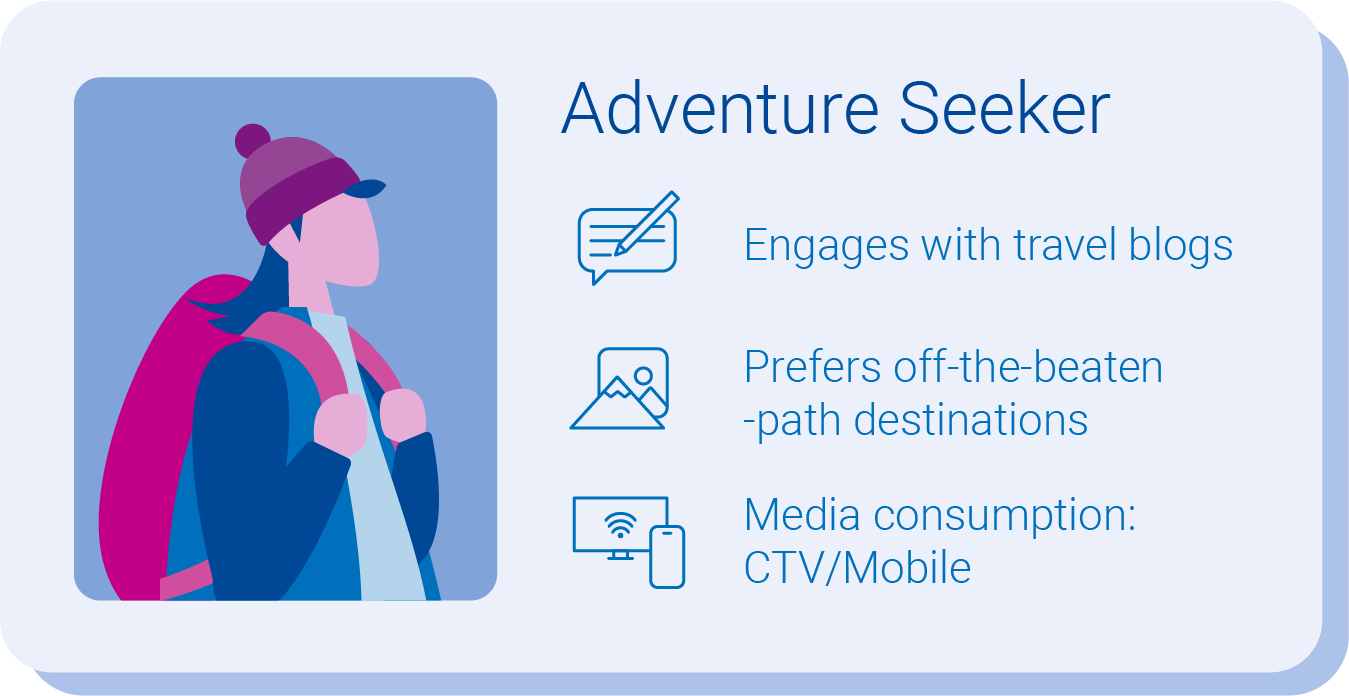
Profile of an Adventure Seeker

These audience segments identified travelers most likely to engage in the unique travel experiences Windstar offers. The insights revealed not only who these travelers are, but also where they consume media, how they make travel decisions, and what influences their purchasing behavior. This data guided the development of hyper-targeted media buys, ensuring Windstar’s messaging reached the right people on the right platforms at the right time—maximizing engagement and driving qualified leads.

The results: Mapping spend to bookings

By utilizing data connectivity and measurement, Windstar gained the insights needed to optimize every aspect of its marketing—audiences, media placements, channels, and more. This data-driven approach revealed which tactics were most effective and enabled Windstar to refine campaigns in real-time for maximum impact.

  • 6,500+ bookings attributed to digital efforts: Over 6,500 bookings—valued at over $20 million—were tied to specific MMGY-managed placements, demonstrating which data-driven tactics led passengers to book. This level of attribution was only possible because we helped Windstar measure and connect the right data points.
  • 13:1 ROAS: By investing $1.48 million in highly trackable, data-informed media, Windstar achieved an impressive 13:1 return on ad spend. Data connectivity gave Windstar the clarity needed to target the right audiences and channels—turning every $1 of spend into $13 of bookings.
  • Actionable cost per booking benchmark: Armed with the ability to map ad spend to individual bookings, Windstar’s average cost per booking settled at $236. With insight into which audiences and placements performed best, Windstar adjusted its strategy in real-time, lowering acquisition costs across the board.
  • High-value reservations: Attributed bookings were, on average, $500 higher in value than non-attributed bookings. By focusing on the right customer segments and messages—determined through precise measurement and segmentation—Windstar secured more bookings and maximized revenue per guest.
  • Terminal Audiences outperformed: For Terminal-targeted segments, the ROAS soared to 28:1 with nearly half the cost per booking compared to non-Terminal audiences. This outcome illustrates how advanced data segmentation and connectivity deliver more profitable guests at lower acquisition costs—further proof that continuous optimization grounded in real data pays off.

What this means for travel and hospitality

Windstar’s success story illuminates a bigger truth for the travel and hospitality industry: closing the attribution loop is no longer optional. In a fiercely competitive marketplace, brands need concrete proof that their marketing investments drive awareness and translates into real revenue. By marrying MMGY’s travel-specific marketing acumen with Experian’s marketing data and identity solutions, travel brands can:

  • Invest with confidence: Marketing investment flows to the most effective channels and placements based on actual bookings, not superficial metrics.
  • Refine strategies: Real-time attribution data creates a feedback loop marketers can use to iterate on messaging, creativity, and targeting for even stronger results.
  • Capture higher-value guests: Pinpointing and appealing to likely travelers allows marketers to increase booking volume and total revenue per booking.
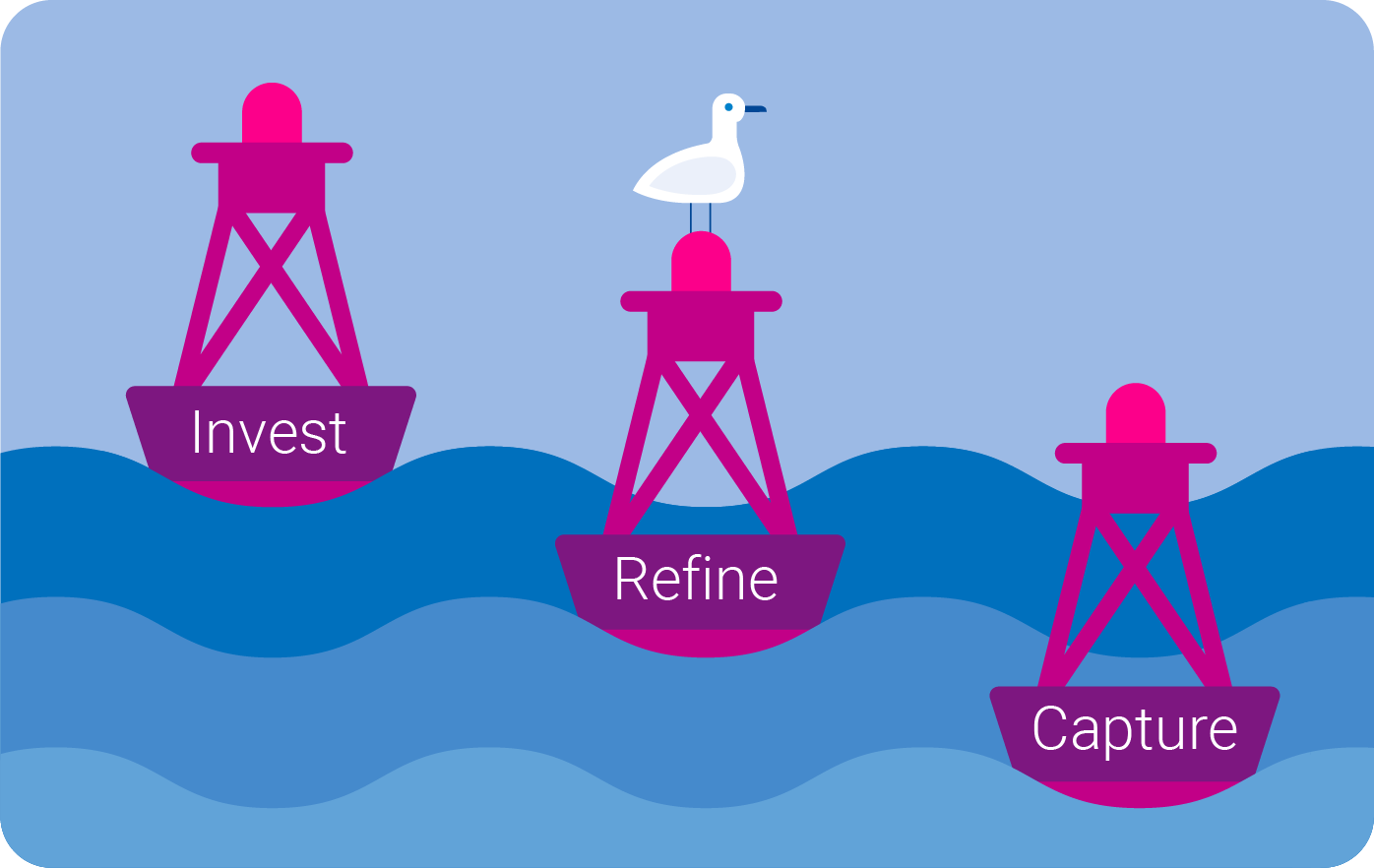
Invest, refine, capture on buoys

Charting a course for data-driven success

By seamlessly linking digital exposure to confirmed reservations, Experian and MMGY gave Windstar Cruises the compass they needed to navigate the complexities of digital marketing confidently. This new level of insight is empowering Windstar to double down on the campaigns, creatives, and segments that move the needle the most.

For travel and hospitality brands worldwide, data-driven attribution goes beyond simply understanding what happened—it’s about shaping what comes next. When marketing decisions are guided by real customer journeys and precise ROI metrics, brands can make more innovative investments, foster stronger guest relationships, and chart a course toward sustainable growth. Ready to embark on your own data-driven journey?

Contact us to learn how Experian and MMGY can help you create impactful, measurable marketing strategies.


Contact us

This site is protected by reCAPTCHA and the Google Privacy Policy and Terms of Service apply.


About MMGY

MMGY is a leading integrated marketing company dedicated to the travel, tourism, and hospitality industries. With deep expertise spanning research, brand strategy, media planning, and creative execution, MMGY helps global travel brands forge meaningful connections with consumers. By utilizing data-driven insights, cutting-edge technology, and decades of experience, MMGY delivers strategic programs that capture attention and drive measurable results for its clients—ensuring that every marketing investment is tied to clear business outcomes. 


Latest posts

Loading…
The evolution of identity: A decade of transformation

Originally appeared on MarTech Series Marketing’s understanding of identity has evolved rapidly over the past decade, much like the shifting media landscape itself. From the early days of basic direct mail targeting to today's complex omnichannel environment, identity has become both more powerful and more fragmented. Each era has brought new tools, challenges, and opportunities, shaping how brands interact with their customers. We’ve moved from traditional media like mail, newspapers, and linear/network TV, to cable TV, the internet, mobile devices, and apps. Now, multiple streaming platforms dominate, creating a far more complex media landscape. As a result, understanding the customer journey and reaching consumers across these various touchpoints has become increasingly difficult. Managing frequency and ensuring effective communication across channels is now more challenging than ever. This development has led to a fragmented view of the consumer, making it harder for marketers to ensure that they are reaching the right audience at the right time while also avoiding oversaturation. Marketers must now navigate a fragmented customer journey across multiple channels, each with its own identity signals, to stitch together a cohesive view of the customer. Let’s break down this evolution, era by era, to understand how identity has progressed—and where it’s headed. 2010-2015: The rise of digital identity – Cookies and MAIDs Between 2010 and 2015, the digital era fundamentally changed how marketers approached identity. Mobile usage surged during this time, and programmatic advertising emerged as the dominant method for reaching consumers across the internet. The introduction of cookies and mobile advertising IDs (MAIDs) became the foundation for tracking users across the web and mobile apps. With these identifiers, marketers gained new capabilities to deliver targeted, personalized messages and drive efficiency through programmatic advertising. This era gave birth to powerful tools for targeting. Marketers could now follow users’ digital footprints, regardless of whether they were browsing on desktop or mobile. This leap in precision allowed brands to optimize spend and performance at scale, but it came with its limitations. Identity was still tied to specific browsers or devices, leaving gaps when users switched platforms. The fragmentation across different devices and the reliance on cookies and MAIDs meant that a seamless, unified view of the customer was still out of reach. 2015-2020: The age of walled gardens From 2015 to 2020, the identity landscape grew more complex with the rise of walled gardens. Platforms like Facebook, Google, and Amazon created closed ecosystems of first-party data, offering rich, self-declared insights about consumers. These platforms built massive advertising businesses on the strength of their user data, giving marketers unprecedented targeting precision within their environments. However, the rise of walled gardens also marked the start of new challenges. While these platforms provided detailed identity solutions within their walls, they didn’t communicate with one another. Marketers could target users with pinpoint accuracy inside Facebook or Google, but they couldn’t connect those identities across different ecosystems. This siloed approach to identity left marketers with an incomplete picture of the customer journey, and brands struggled to piece together a cohesive understanding of their audience across platforms. The promise of detailed targeting was tempered by the fragmentation of the landscape. Marketers were dealing with disparate identity solutions, making it difficult to track users as they moved between these closed environments and the open web. 2020-2025: The multi-ID landscape – CTV, retail media, signal loss, and privacy By 2020, the identity landscape had splintered further, with the rise of connected TV (CTV) and retail media adding even more complexity to the mix. Consumers now engaged with brands across an increasing number of channels—CTV, mobile, desktop, and even in-store—and each of these channels had its own identifiers and systems for tracking. Simultaneously, privacy regulations are tightening the rules around data collection and usage. This, coupled with the planned deprecation of third-party cookies and MAIDs has thrown marketers into a state of flux. The tools they had relied on for years were disappearing, and new solutions had yet to fully emerge. The multi-ID landscape was born, where brands had to navigate multiple identity systems across different platforms, devices, and environments. Retail media networks became another significant player in the identity game. As large retailers like Amazon and Walmart built their own advertising ecosystems, they added yet another layer of first-party data to the mix. While these platforms offer robust insights into consumer behavior, they also operate within their own walled gardens, further fragmenting the identity landscape. With cookies and MAIDs being phased out, the industry began to experiment with alternatives like first-party data, contextual targeting, and new universal identity solutions. The challenge and opportunity for marketers lies in unifying these fragmented identity signals to create a consistent and actionable view of the customer. 2025: The omnichannel imperative Looking ahead to 2025 and beyond, the identity landscape will continue to evolve, but the focus remains the same: activating and measuring across an increasingly fragmented and complex media environment. Consumers now expect seamless, personalized experiences across every channel—from CTV to digital to mobile—and marketers need to keep up. The future of identity lies in interoperability, scale, and availability. Marketers need solutions that can connect the dots across different platforms and devices, allowing them to follow their customers through every stage of the journey. Identity must be actionable in real-time, allowing for personalization and relevance across every touchpoint, so that media can be measurable and attributable. Brands that succeed in 2025 and beyond will be those that invest in scalable, omnichannel identity solutions. They’ll need to embrace privacy-friendly approaches like first-party data, while also ensuring their systems can adapt to an ever-changing landscape. Adapting to the future of identity The evolution of identity has been marked by increasing complexity, but also by growing opportunity. As marketers adapt to a world without third-party cookies and MAIDs, the need for unified identity solutions has never been more urgent. Brands that can navigate the multi-ID landscape will unlock new levels of efficiency and personalization, while those that fail to adapt risk falling behind. The path forward is clear: invest in identity solutions that bridge the gaps between devices, platforms, and channels, providing a full view of the customer. The future of marketing belongs to those who can manage identity in a fragmented world—and those who can’t will struggle to stay relevant. Explore our identity solutions Contact us Latest posts

Published: Nov 25, 2024 by Christopher Feo, Chief Business Officer

Five considerations for the future of innovation in data and identity

We spoke with experts from Audigent, Choreograph, Goodway Group, MiQ, Snowflake about the future of data and identity.

Published: Nov 21, 2024 by Experian Marketing Services

Subscribe to our newsletter

Enter your name and email for the latest updates

This site is protected by reCAPTCHA and the Google Privacy Policy and Terms of Service apply.

About Experian Marketing Services

At Experian Marketing Services, we use data and insights to help brands have more meaningful interactions with people. As leaders in the evolution of the advertising landscape, Experian Marketing Services can help you identify your customers and the right potential customers, uncover the most appropriate communication channels, develop messages that resonate, and measure the effectiveness of marketing activities and campaigns.

Visit our website

Subscribe to our newsletter

Stay up to date on the latest industry news and receive expert tips from our marketing experts.
Subscribe now!