At A Glance
First-party data creates value when marketers activate it. In 2026, leading brands will move beyond data collection by connecting, enriching, and activating their first-party data across channels. With identity as the foundation, first-party data activation improves relevance, efficiency, and measurement. Experian helps marketers turn static records into scalable audiences that perform across media.Why does activation expand the value of first-party data?
First-party data already delivers value through insight, personalization, and owned-channel engagement. In 2026, marketers expand that value by activating first-party data across owned and paid media channels. Activation is how existing data investments scale beyond CRM into broader audience strategies.
Simply capturing customer data used to feel like a win. Building a CRM, capturing emails, and logging transactions delivered valuable insights and fueled owned channels like email and direct mail. But that was largely where activation stopped.
In 2026, that mindset is no longer enough. Owning first-party data is now just the starting point. The real advantage comes from what marketers do next. Safely turning static records into addressable, scalable audiences is where first-party data can continue to prove its value.
How are marketers shifting from data collection to data connection?
As signals fragment, marketers are shifting from data collection to data connection to make first-party data usable across channels. Experian supports this shift by helping marketers onboard and resolve their data into a clean, connected foundation using our identity graphs. Connecting offline and online interactions allows brands to unify customer data across touchpoints to make it actionable. That connection enables more use cases, from audience activation and measurement to personalization and cross-channel optimization.
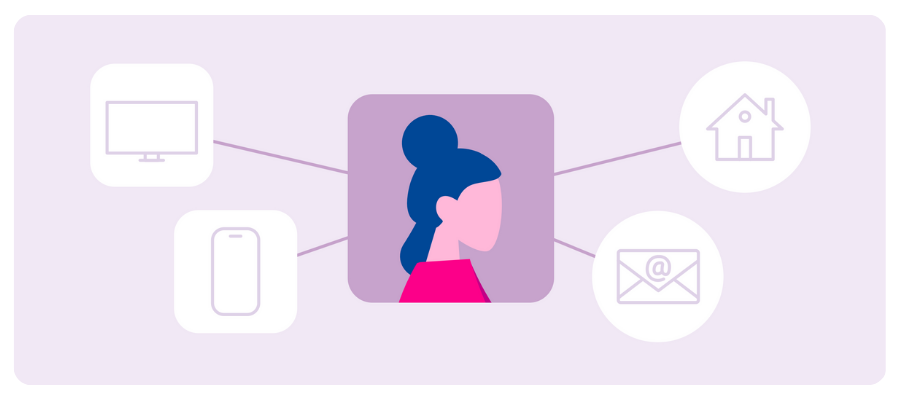
Most brands recognize the value of their own data. Fewer have the infrastructure to make it work across the media ecosystem. Data often sits in silos, disconnected from activation platforms, analytics, and measurement. Without the ability to unify, enrich, and deploy that data, first-party data remains underutilized.
In 2026, leading marketers are closing that gap by turning first-party data into audiences they can reach across owned and paid channels, bringing consistency to targeting and measurement. That same connectivity also enables better suppression, allowing brands to avoid targeting existing customers in prospecting campaigns. For consumers, this reduces irrelevant and repetitive ads. For marketers, it improves efficiency and protects the customer experience.
With Experian’s identity foundation in place, first-party data becomes usable across the media ecosystem. Marketers can enrich their first-party data with behavioral, demographic, and lifestyle insights, combined with trusted partner data, and activated across channels like social, programmatic, and TV, from a single environment.
Why is first-party data becoming central to media planning?
First-party data has become central to media planning because it gives marketers control, consistency, and continuity across channels. As media environments fragment, first-party data provides a stable signal that supports activation, personalization, and measurement at scale.
Rather than relying on any single data source, marketers are increasingly combining their own first-party data with trusted third-party and partner data to extend reach, improve relevance, and fill gaps in their own insights. Doing so effectively requires deterministic matching, privacy-first infrastructure, and partners that can support both owned and syndicated data at scale.
This approach allows brands to maintain control over their customer relationships while continuing to utilize third-party data for prospecting, modeling, and performance optimization across channels. As a result, first-party data activation is now central to how media strategies are planned and executed.

2026 Digital trends and predictions report
Our 2026 Digital trends and predictions report is available now and reveals five trends that will define 2026. From curation becoming the standard in programmatic to AI moving from hype to implementation, each trend reflects a shift toward more connected, data-driven marketing. The interplay between them will define how marketers will lead in 2026.
What business impact does first-party data activation deliver?
First-party data activation delivers measurable business impact, including:
- 70% of B2B marketers plan to increase their use of first-party data, more than any other data strategy.
- 67% percent of brands and 80% of publishers expect to grow their first-party data sets in the next year.
- The payoff is tangible. Activating first-party data can reduce customer acquisition costs by up to 50% and drive a 10-15% lift in revenue.
Activation drives efficiency. Brands that put their own data to work see lower acquisition costs and stronger revenue lift. These gains come from relevance. When marketers activate audiences built from known customer relationships, they reduce waste and optimize toward outcomes that matter.
Experian’s Audience Engine supports this model at scale. Audience Engine helps marketers onboard and activate first-party data through a single unified platform. It connects more than 3,500 syndicated audiences, over 50 media platforms, and 20+ third-party data providers. Marketers can combine, gain insights from, and deploy first-party data quickly.

What should marketers plan for first-party data activation in 2026?
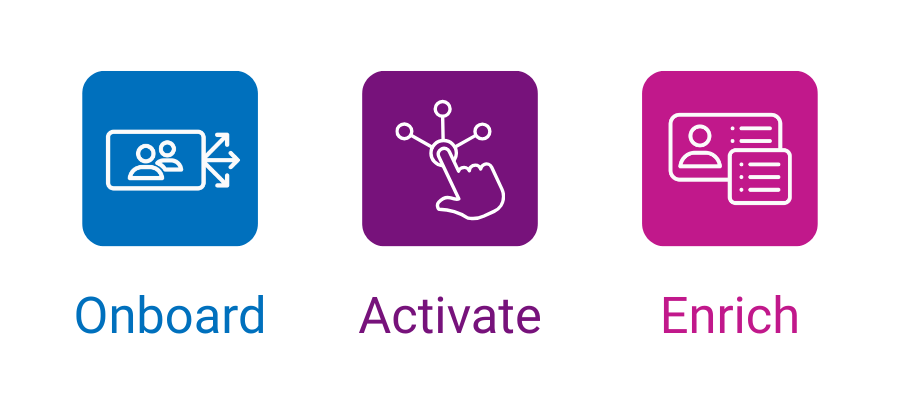
In 2026, marketers should plan for first-party data to operate across onboarding, activation, and measurement as a connected workflow. Planning now centers on interoperability, scalable activation tools, and privacy-forward enrichment rather than isolated data use cases. Identity underpins each of these three shifts.
Why first-party data activation matters to marketers in 2026
In 2026, first-party data delivers value when marketers activate it across channels. The opportunity is to extend the value of what already exists through activation, enrichment, and identity-led connection across channels. That means uncovering insights within your existing customer base, building lookalikes from your highest-value audiences, and activating those segments across every channel.
With Experian’s Audience Engine, marketers can onboard, enrich, and activate their first-party data in one secure, interoperable platform. Identity connects to outcomes. Performance becomes measurable. Privacy stays at the core.
To explore this trend and the others shaping marketing in 2026, download our 2026 Digital trends and predictions report.
Ready to connect with our team?
About the authors

Doug McLennan
Sr. Director, Product Management, Experian
Doug McLennan is the Senior Director of Product Management at Experian Marketing Services where he is focused on product strategy for activation. His past work includes managing syndicated audiences at Oracle Data Cloud and building personalized video ad products at an agency. Doug lives in Colorado and skis as much as his family will allow.

Rachael Weinstein
Director of Product Management, Experian
Rachael Weinstein is the Director of Product Management at Experian Marketing Services where she is focused on product strategy. Previously, she held product roles in advanced TV at WarnerMedia and worked in analytics across multiple startups.
First-party data activation FAQs
First-party data activation means using a brand’s own customer data to build addressable audiences across paid and owned channels. Experian’s identity spine connects, enriches, and activates that first-party data consistently while preserving control and privacy.
First-party data needs identity to connect customer records across devices, platforms, and environments into a unified view. Experian identity resolution makes it possible to activate, measure, and manage frequency consistently across paid and owned media.
First-party data activation improves efficiency by reducing waste and increasing relevance. Marketers focus spend on known and modeled audiences, suppress existing customers in prospecting, and optimize toward outcomes rather than impressions.
Experian supports first-party data activation by resolving, enriching, and activating customer data using identity as the foundation. Through Audience Engine, Experian enables onboarding, audience creation, cross-channel activation, and measurement within one environment.
Latest posts

Discover how Yieldmo utilizes Experian’s identity and audience data to drive personalized, omnichannel ad campaigns with precision, privacy, and measurable results.
Learn how the buy-side can use Experian’s advanced data and identity solutions to be their guide through the jungle and emerge as winners.

We spoke with industry leaders from Ampersand, Basis Technologies, Captify, Cuebiq, CvE, Fetch, Madhive, MiQ, and Samsung to gather insights on how innovations in data and identity are creating stronger consumer connections. Here are five key insights to consider. 1. Build on trust with first-party data Stricter privacy regulations and growing customer expectations mean businesses must rethink how they gather and use data. A robust first-party data strategy centers on gathering high-quality data, such as behavioral and transactional data. By using behavioral, lifestyle, and purchasing data, brands can craft personalized strategies that align with their goals. This approach balances effective targeting with building trust and complying with privacy rules. Integrating identity solutions like Unified I.D. 2.0 (UID2) and ID5 into existing data strategies improves interoperability across platforms while keeping user privacy intact. These tools help create more effective campaigns. "We've been preparing and leaning into educating our clients around the value of first-party data. These are very important and primary considerations in any of our campaigns."April Weeks, Basis Technologies 2. Align metrics with business goals To demonstrate clear value, campaigns need to tie their outcomes to broader goals. Relying only on click-through rates or CPMs won’t cut it. Metrics that measure meaningful results, like driving sales or increasing customer retention, provide greater transparency than surface level data, like clicks or impressions. A continuous feedback loop between targeting and measurement ensures campaigns can be refined to better align with business objectives. This feedback helps marketers understand who they are targeting and how those audiences are driving key business results. Shifting focus to metrics that resonate with stakeholders ensures that marketing efforts are evaluated based on their true contribution to the company's objectives. "The television industry has access to more data than ever before, and at Samsung Ads, our ACR technology helps us provide valuable insights about what content and ads are being viewed. This abundance of data enables us to support clients in aligning their campaigns with business objectives effectively."Justin Evans, Samsung Ads 3. Personalize experiences to boost engagement Personalization drives stronger customer relationships by delivering tailored experiences to individual customer needs. Using data-driven insights to fine-tune offers and messaging makes interactions more relevant, strengthening brand loyalty. Combining behavioral, lifestyle, and transactional data provides a comprehensive understanding of the customer journey and ensures each touchpoint feels personal. Testing and iterating on personalization strategies also helps identify which data and approaches yield the best results. Scaling these efforts means customers receive the right messaging at the right time, and businesses see better outcomes. "Every business should be building a data strategy that thinks about the different versions of data that exist and how they bring that together. They don't necessarily need to own all of it but have a clear rationale and strategy about where you're using which data sets."Paul Frampton, CvE 4. Utilize advanced measurement tools for smarter decisions Improving the effectiveness of campaigns starts with using sophisticated measurement tools to gain actionable insights. Using analytics like brand lift studies, foot traffic analysis, app download tracking, incrementality, and share of search allows marketers to understand the full impact of their efforts. With these resources, teams can pinpoint what’s working, make real-time adjustments, and refine their approach. This adaptability ensures budgets are used as effectively as possible. Learn how Swiss Sense measured marketing outcomes using Mosaic® "We are playing a leading role in democratizing new tools for local advertisers. By mimicking the marketing funnel mentality, we've introduced solutions ranging from measuring brand lift to tracking foot traffic and app downloads."Luc Dumont, Madhive 5. Adapt quickly to stay competitive The only constant in advertising is change. Adapting quickly to new technologies and consumer behaviors keeps businesses competitive. A culture of agility fosters innovation, making it easier to respond to industry shifts and discover new opportunities. Companies that anticipate change and invest in modern data solutions position themselves for long-term growth. Whether it’s adjusting to privacy updates, exploring emerging tech, or staying flexible, businesses must continuously invest in adapting their platforms and strategies. "Falling behind is not really an option. There's always a change in advertising and in data where there's a new horizon. The people who stay close to that and innovate will always follow it."Amelia Waddington, Captify Shaping the future Building meaningful consumer connections requires advertisers to combine robust data strategies with flexibility and innovation. By focusing on these five considerations, marketers can adapt to today’s challenges while preparing for what’s ahead. Connect with our experts Latest posts