
Buyers can now put Experian’s audience and contextual intelligence to work in Google Ad Manager Curation in two ways: through off-the-shelf solutions available directly in Google Ad Manager, or through Custom Curation packages that Experian builds using Google Ad Manager’s inventory supply. Together, these options bring Experian’s consumer data foundation closer to the Google supply agencies already buy, with the flexibility to choose between a ready-to-use solution and an Experian package tailored to specific campaign goals.
Why targeting at the source matters
Many audience strategies still apply targeting on the buy side, which means signals pass through multiple systems before an impression is evaluated. Each step can shrink the pool of requests where the audience is still recognizable, so a carefully built strategy can reach the auction at a fraction of the scale it started with.
Google Ad Manager Curation moves segment evaluation closer to the ad request. When a request matches the selected Experian segment, Ad Manager sends the bid request with the associated Deal ID to the buyer’s DSP. This more direct path can support stronger match and deal-transaction rates, more accurate forecasting, and better access to the audience defined in the strategy.
As AI shapes more media decisions, the quality and provenance of the data feeding those systems matter more. Evaluating audience or contextual criteria closer to the source helps preserve the connection between the strategy and the impression being considered.
Two ways to get started
The right entry point depends on how much customization the campaign requires. Buyers can access Experian solutions off-the-shelf directly in Google Ad Manager or work with Experian to build a Custom Curation package using Google Ad Manager inventory supply.
Start off-the-shelf
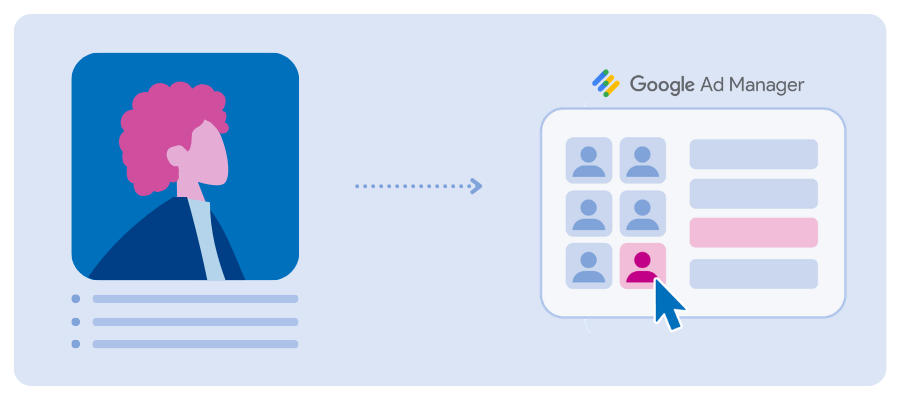
For buyers who want direct, self-service access to Experian audience and contextual solutions. Experian solutions are available off-the-shelf in Google Ad Manager, giving buyers a straightforward way to select the data or contextual strategy that fits their campaign and create packages through Google Ad Manager’s Curation capabilities.
Experian also offers Predictive Indexed, which uses Experian audiences to predict the contextual categories and pages to target based on the likelihood that consumers visiting those environments fall within the selected audience. This gives buyers an audience-informed way to approach contextual activation without requiring identity at the point of activation.
Build a Custom Curation package

For buyers who need a strategy tailored to specific audience, contextual, and inventory requirements.
Experian can build Custom Curation packages using Google Ad Manager’s inventory supply based on the targeting criteria that matter for a campaign. Where off-the-shelf solutions draw on Experian data, custom packages can also incorporate partner audiences and a brand’s own first-party audiences. Packages can combine Experian audiences, partner audiences, a brand’s own first-party audiences, contextual signals, and inventory or site criteria.
Experian applies those criteria against Google Ad Manager inventory supply and brings the data, targeting, and inventory together into a single curated deal. This gives buyers a way to combine audience and supply decisions rather than managing each component separately.
The approach can be tailored to the campaign. A buyer might start with a defined audience and add contextual or inventory criteria, bring a brand’s established first-party audience into the strategy, or build around specific supply and audience-quality requirements.
Choose the path that fits the campaign
Both paths do the same underlying thing: they move the audience or contextual decision closer to the ad request, before signal loss builds across the path. Whether a campaign calls for something ready to use or a package built to spec, the result is a more direct line from strategy to impression.
Ready to get started? Explore Experian solutions available off-the-shelf in Google Ad Manager or contact your Experian representative to request a Custom Curation package.
Latest posts

We spoke with industry leaders from Ampersand, Basis Technologies, Captify, Cuebiq, CvE, Fetch, Madhive, MiQ, and Samsung to gather insights on how innovations in data and identity are creating stronger consumer connections. Here are five key insights to consider. 1. Build on trust with first-party data Stricter privacy regulations and growing customer expectations mean businesses must rethink how they gather and use data. A robust first-party data strategy centers on gathering high-quality data, such as behavioral and transactional data. By using behavioral, lifestyle, and purchasing data, brands can craft personalized strategies that align with their goals. This approach balances effective targeting with building trust and complying with privacy rules. Integrating identity solutions like Unified I.D. 2.0 (UID2) and ID5 into existing data strategies improves interoperability across platforms while keeping user privacy intact. These tools help create more effective campaigns. “We’ve been preparing and leaning into educating our clients around the value of first-party data. These are very important and primary considerations in any of our campaigns.”April Weeks, Basis Technologies 2. Align metrics with business goals To demonstrate clear value, campaigns need to tie their outcomes to broader goals. Relying only on click-through rates or CPMs won’t cut it. Metrics that measure meaningful results, like driving sales or increasing customer retention, provide greater transparency than surface level data, like clicks or impressions. A continuous feedback loop between targeting and measurement ensures campaigns can be refined to better align with business objectives. This feedback helps marketers understand who they are targeting and how those audiences are driving key business results. Shifting focus to metrics that resonate with stakeholders ensures that marketing efforts are evaluated based on their true contribution to the company’s objectives. “The television industry has access to more data than ever before, and at Samsung Ads, our ACR technology helps us provide valuable insights about what content and ads are being viewed. This abundance of data enables us to support clients in aligning their campaigns with business objectives effectively.”Justin Evans, Samsung Ads 3. Personalize experiences to boost engagement Personalization drives stronger customer relationships by delivering tailored experiences to individual customer needs. Using data-driven insights to fine-tune offers and messaging makes interactions more relevant, strengthening brand loyalty. Combining behavioral, lifestyle, and transactional data provides a comprehensive understanding of the customer journey and ensures each touchpoint feels personal. Testing and iterating on personalization strategies also helps identify which data and approaches yield the best results. Scaling these efforts means customers receive the right messaging at the right time, and businesses see better outcomes. “Every business should be building a data strategy that thinks about the different versions of data that exist and how they bring that together. They don’t necessarily need to own all of it but have a clear rationale and strategy about where you’re using which data sets.”Paul Frampton, CvE 4. Utilize advanced measurement tools for smarter decisions Improving the effectiveness of campaigns starts with using sophisticated measurement tools to gain actionable insights. Using analytics like brand lift studies, foot traffic analysis, app download tracking, incrementality, and share of search allows marketers to understand the full impact of their efforts. With these resources, teams can pinpoint what’s working, make real-time adjustments, and refine their approach. This adaptability ensures budgets are used as effectively as possible. Learn how Swiss Sense measured marketing outcomes using Mosaic® “We are playing a leading role in democratizing new tools for local advertisers. By mimicking the marketing funnel mentality, we’ve introduced solutions ranging from measuring brand lift to tracking foot traffic and app downloads.”Luc Dumont, Madhive 5. Adapt quickly to stay competitive The only constant in advertising is change. Adapting quickly to new technologies and consumer behaviors keeps businesses competitive. A culture of agility fosters innovation, making it easier to respond to industry shifts and discover new opportunities. Companies that anticipate change and invest in modern data solutions position themselves for long-term growth. Whether it’s adjusting to privacy updates, exploring emerging tech, or staying flexible, businesses must continuously invest in adapting their platforms and strategies. “Falling behind is not really an option. There’s always a change in advertising and in data where there’s a new horizon. The people who stay close to that and innovate will always follow it.”Amelia Waddington, Captify Shaping the future Building meaningful consumer connections requires advertisers to combine robust data strategies with flexibility and innovation. By focusing on these five considerations, marketers can adapt to today’s challenges while preparing for what’s ahead. Connect with our experts Latest posts

Experian’s 2025 Digital trends and predictions report offers insights from our industry-leading data and partners on 2025 marketing trends.

Learn how Swiss Sense used Experian’s Mosaic® data to drive targeted marketing and personalized experiences for international growth.