At A Glance
Sell-side decisioning is changing how publishers and advertisers collaborate, improving efficiency and fostering more meaningful connections. Experian’s syndicated audiences and data solutions help both sides reach the right audiences with greater transparency and privacy.In our Ask the Expert Series, we interview leaders from our partner organizations who are helping lead their brands to new heights in AdTech. Today’s interview is with Paul Zovighian, VP of Marketplaces at Index Exchange.
Sell-side activation vs. buy-side packaging
What’s fundamentally changed with sell-side decisioning, and how does it now diverge from traditional buy-side packaging?
Sell-side decisioning is programmatic’s next major evolution – one that redefines how intelligence enters the transaction. Advances in infrastructure and computing power now allow supply-side platforms(SSPs) to act in the crucial pre-bid moment, enriching impressions with context, quality, and data before they reach the buy side.
This isn’t just about efficiency; it’s about unlocking new value. Smarter requests mean buyers see only the most relevant opportunities, while publishers gain recognition for the true worth of their audiences and environments.
We’re still at the beginning of this shift. Many players still package inventory without engaging in real pre-bid intelligence. As the market matures, the companies that evolve toward sell-side decisioning will be the ones to set the pace for programmatic’s future.
Economic shifts with scaled curation
As curation scales, what economic levers shift for both publishers and buyers, and how do those shifts influence deal structure and media planning?
As curation scales, one of the most powerful levers is data. It’s the industry’s most valuable asset, and on Index it keeps its full worth. We don’t take a platform cut or add hidden fees, so data partners benefit from the clearest, most efficient economics in the market. Data vendors gain confidence that their economics aren’t eroded by a platform tax.
For publishers, this means stronger yield and more ad spend flowing directly into working media. When data retains its full value, it enhances how impressions are packaged, priced, and differentiated—driving more competition for quality inventory and more opportunities for revenue.
For buyers, it means compressed supply paths and total transparency – they know exactly what they’re paying for. With no intermediaries and full transparency into economics, buyers gain a clearer view of where their budgets go and the confidence that their investments reach real audiences in trusted environments. They benefit from cleaner supply chains, better performance, and more meaningful alignment between spend and outcome. The result is a healthier marketplace where both sides benefit from efficiency, fairness, and scale.
Moving decisions upstream for value
What decisions historically made in DSPs should now move upstream to publishers or SSPs to unlock more value, and which should remain buy-side?
Decisioning is no longer confined to demand-side platforms(DSPs). We can enrich impressions by applying intelligence — via data, algorithms, creative technology, and more, before they even reach the buy side — adding context, filtering out low-quality supply, and expanding audience discovery.
This isn’t about shifting roles; DSPs remain critical for campaign strategy, optimization, and budget allocation. The sell side simply ensures every bid request is smarter from the start, creating more value for all parties.
In doing so, we also alleviate pressure on DSPs — enabling more comprehensive data discovery by searching for signals at the top of the funnel, prior to optimization. That means DSPs can focus on what they do best, supported by a cleaner, more transparent supply path.
Index Marketplaces use cases explained
Index Marketplaces is designed to enable the strength of our partners, and Experian brings one of the broadest sets of demographic and audience insights in the industry. That scale enables a wide variety of applications, from more precise audience activation to deeper measurement and analytics.

What’s different on the sell side is how those insights are applied. By activating Experian’s syndicated audiences directly at the point of decision, their value is realized in real time and across the full scale of the open internet. Buyers gain a clearer path to relevant audiences, and publishers benefit from stronger alignment between data and media.
It’s an approach that ensures partners like Experian can maximize the impact of their assets while helping the market move toward more intelligent, performance-driven activation.
Identity signals with stronger privacy
For identity partners like Experian, what’s the right way to bring audience, context, and propensity signals into sell-side activation?
The beauty of sell-side decisioning is that it reduces the hops in how identity signals are applied. Without it, IDs have to travel through multiple platforms, creating extra handoffs and additional risks of data loss or leakage.
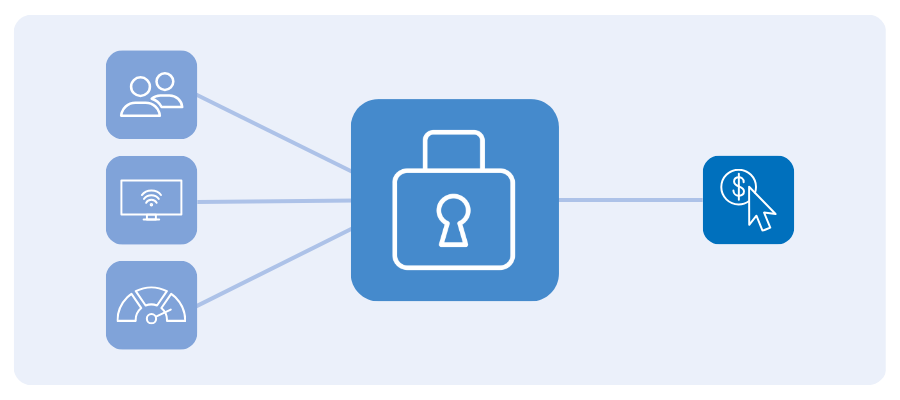
With sell-side decisioning, those signals are obfuscated under a deal ID and applied directly at the point of decision. That means audience, context, and propensity data are activated securely, without ever leaving the sell-side environment.
For partners like Experian, it’s the cleanest path to value: fewer hops, stronger privacy protection, and clearer economics for everyone in the chain.
Contact us
About our expert

Paul Zovighian
VP of Marketplaces, Index Exchange
Paul Zovighian carries over a decade of industry expertise, stemming from his analytics and optimization roots to his current post as VP, Marketplaces, where he is focused on the commercial activation of Index’s newest product, Index Marketplaces. Previously, in his role as VP of corporate development, Paul led Index’s first-ever business acquisition. In his spare time, he enjoys long walks on the beach and befriending cats in NYC’s thriving bodega community.
About Index Exchange
Index Exchange is a global advertising supply-side platform enabling media owners to maximize the value of their content on any screen. They’re a proud industry pioneer with over 20 years of experience connecting leading experience makers with the world’s largest brands to ensure a quality experience for consumers.
FAQs
Sell-side decisioning allows publishers to add intelligence, like audience data and context, before ad impressions are sent to buyers. This makes the process more efficient and ensures advertisers see only the most relevant opportunities.
Traditional buy-side packaging happens after impressions are sent to demand-side platforms (DSPs). Sell-side decisioning moves some of that intelligence upstream, enriching impressions earlier and reducing inefficiencies.
Curation refers to the process of organizing and enriching ad inventory with data and context. For publishers, it leads to better yield and more ad spend going directly to their media. For advertisers, it means clearer, more transparent supply paths.
By applying audience and identity signals directly on the sell side, data stays within a secure environment. This reduces the number of platforms handling sensitive information, lowering the risk of data loss or leakage.
Experian provides demographic and audience insights that are activated directly at the point of decision. This helps advertisers reach the right audiences more effectively while ensuring publishers can maximize the value of their inventory.
When publishers and SSPs handle some decisioning earlier, DSPs can focus on campaign strategy and optimization. This creates a cleaner, more efficient process for everyone involved.
A deal ID is a unique identifier used in programmatic advertising to bundle audience and context signals securely. It ensures data is applied without being exposed or shared across multiple platforms.
Latest posts

Learn how leading agencies are using AI, data and human expertise to uncover deeper audience insights and drive results for their clients.
Explore how AdTech interoperability connects partnerships, identity, consumer intelligence and AI to create a more connected advertising ecosystem.

Watch leaders from Adobe DSP, AdsWizz, Alaska Airlines, Grupo Bimbo, PMG, and Wpromote on how trust turns creators into real brand partners.