Business Credit Education
articles and videos about business credit education
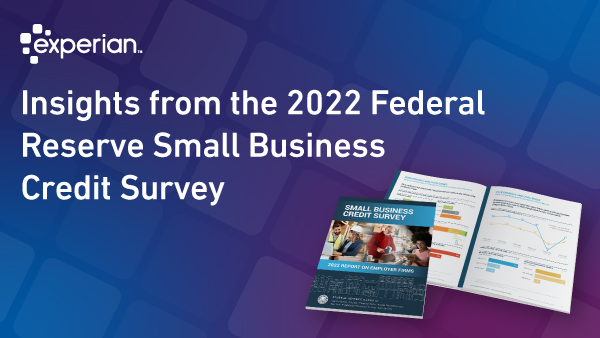
Gary Stockton: In November of last year, the federal reserve banks conducted the Small Business Credit Survey. In all, they surveyed nearly 11,000 small businesses to ask them about their financial condition, whether they had sought financing in the prior 12 months, and what the effect the pandemic had on their business. The results of that survey have just been published in the 2022 Report on Employer Firms. Emily Wavering Corcoran is the Program Manager of the Small Business Credit Survey (SBCS) in the Community Development Department of the Federal Reserve Bank of Cleveland. The SBCS is a national collaboration among the 12 reserve banks of the Federal Reserve System, to gather timely information on small business, economic conditions, financing needs and credit availability. And we're recording this interview on Friday, March 4th, 2022 ahead of the Federal Open Market Committee meeting. Emily, welcome to the Small Business Matters podcast. Emily Wavering Corcoran: Thank you so much, Gary. Glad to be here. Gary Stockton: Well, one of the most heavily impacted small business segments is leisure and hospitality. Could you tell us what you found out about the financial condition of businesses in this sector? Emily Wavering Corcoran: Absolutely. So as you've mentioned in sort of the background you gave about the survey, the SBCS is fielded every fall. The 2021 SBCS, of course, was fielded from September through November, 2021. And it gathered information from over 17,000 small business owners across the country, including nearly 11,000 small businesses with employees. So that's the segment of small businesses that this report in particular focuses on. As you mentioned, the survey provides detailed information on performance and financing conditions from the perspective of small business owners. In addition to the standard questions about business conditions, debt and credit, the 2021 survey included questions about the ongoing effects of the pandemic, including its impact on revenues and employment, operating challenges, including workforce challenges and applications for pandemic related financial assistance. We also, for the second year in a row, included a question asking small business owners about the financial condition of their business, which is what you just referenced. They were given five options to select from. They could say their business was in excellent financial condition, the financial condition was very good, good, fair, or poor. Out of all employer small businesses, 59% were in poor or fair financial condition at the time of the survey, so, fall 2021. Now, when we drill down more deeply, we see that firms owned by people of color, firms with fewer employees, and firms in particular industries, including leisure and hospitality, were most likely to be in fair or poor financial condition. So relative to small businesses in other industries, leisure and hospitality firms were more likely to be in fair or poor financial condition. So three out of four firms in leisure and hospitality. In many ways, this is not surprising, right? Leisure and hospitality includes restaurants, hotels, entertainment venues. So many of those small businesses that were particularly hard hit, especially early in the pandemic. And that shows the persistent impact of that initial hit and trying to weather the pandemic as a firm that really relies on face-to-face contact, on having people come into the business--All of those things really hold for firms in the leisure and hospitality sector. Gary Stockton: More than half of the firms were in fair or poor financial condition at the time of the survey. And nearly all firms faced at least one operation or financial challenge in the prior 12 months. With so much government assistance made available, why do you think so many small businesses are still struggling? Emily Wavering Corcoran: Yeah, I think for this question, it's important to think about the counterfactual. What might SBCS data look like had pandemic related financial assistance not been made available? I don't know the answer to that question, no one does, but the fact that business performance numbers are tempered, and that many small businesses continue to face operational and financial challenges, even with pandemic related financial assistance, suggests that in the absence of that support, aggregate outcomes for small businesses, and of course the resulting SBCS data to measure those outcomes, could have been much worse. Gary Stockton: Can you talk a little about which businesses applied for additional financing vs. those who did not, and some of the reasons why they did not apply? Emily Wavering Corcoran: The Small Business Credit Survey identifies applicants or small businesses that did apply for credit, and non-applicants, or small businesses that did not apply for credit. So we get both sides of the experiences, right? Apply for credit, don't apply for credit. And then we can drill down to more deeply understand both of those sets of firms: firms that did apply, firms that chose not to apply. So 36% of firms did apply for financing. And 64% did not apply for financing. When you look at just that set of non-applicants, firms that did not apply for financing, 46% of those businesses did not apply because they had sufficient financing. So they did not need to apply for a loan or a line of credit because they had ample financing through other streams. Then 14% of that non applicant pool were discouraged, meaning that they did not apply because they believed that they would be turned down. When you look again, one step further, more deeply at those discouraged firms, a majority of those firms, or just over half of those firms, believed they would be turned down because of weak business financials. And then other reasons that those folks cited in the survey were lender requirements, the belief that lenders would not extend financing based on some characteristic of their business; previous denials and bad experiences in the past that made them discouraged about applying again, and missing documentation was also a relatively big factor for folks. Gary Stockton: You mentioned them being concerned about weak financials as a leading reason. Would that be a major concern when seeking government help through the PPP program? Or was it just maybe a confidence issue with that business owner? Emily Wavering Corcoran: I think both. Financials are certainly an important part of the credit application process. And so as we saw, business fundamentals being hard hit through the pandemic, that certainly played out in both folks deciding to apply for credit or not. And then also it played out in some of the outcomes that we saw for folks who did choose to apply for credit. Gary Stockton: Yeah. The other thing that we noticed in the report was that 2021 PPP outcomes were worse than 2019, particularly in that leisure and hospitality sector. And particularly with black and brown businesses, do you know what's going on there? Emily Wavering Corcoran: Yeah. So again, I would point to some of the information in the report about financial condition, about annual revenues and employment. Certain segments of firms being really hard hit, and then that playing out in different ways in terms of credit access. We did, as you point out, we saw both a decline in firms seeking PPP and a decline in firms receiving PPP. The why is an incredibly complex question to answer, right? Definitely not fully answered by SBCS data, but it is at least partially explained by the relatively smaller size of the third round of PPP funding compared to the two prior rounds, as well as additional eligibility requirements for PPP. But again, not fully answered by SBCS data, certainly something that I'm sure additional research will look at in the years to come. Gary Stockton: What was the most surprising thing to you about the 2022 survey? Was there one thing that really stood out to you as, as important? Emily Wavering Corcoran: Good question, but to be honest, “surprised” doesn't quite capture what I felt about any of the survey results as we were digesting the data and really examining things. In many ways, I feel like the survey data add greater nuance and more robust evidence to ongoing narratives about small business hardship and resilience that we've been hearing about and talking about over the last two years at this point. instead of surprise, I would say that the results for me strengthened my resolve to continue collecting and producing this data so that we can continue to have structural information on small business credit experiences. Small business does matter, and of course, small businesses are on the road to recovery, but it appears to be a long and uneven road, but SBCS data will continue to be there as small businesses move forward. Gary Stockton: Well, Emily, I'd like to thank you for sharing your thoughts with our listeners. Where can they learn more about the great work going on at the Federal Reserve Banks? Emily Wavering Corcoran: I love that question. You can learn more about the Small Business Credit Survey in particular at www.fedsmallbusiness.org. I would also encourage your listeners to check out www.fedcommunities.org, which is a website that shares information across the Federal Reserve System on the great work that the Federal Reserve Banks are doing at the community level. Gary Stockton: Emily, thank you very much for your time. 2022 Small Business Credit Survey Note: We recorded this interview on Friday, March 4, 2022.

There are two types of credit inquiry, hard and soft. How do hard and soft credit inquiries impact your business credit score? We explain the difference.
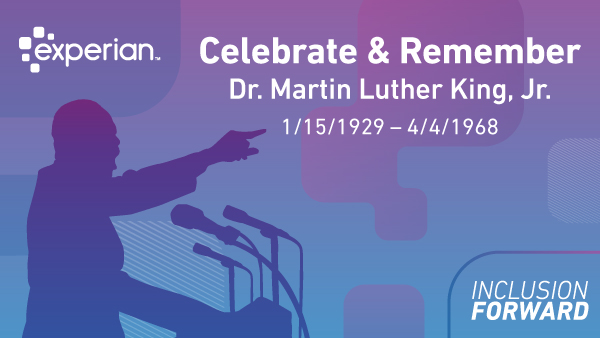
The legacy of Martin Luther King, Jr. is one that has spanned generations and continues to inspire people around the world. The hope he brought with his message of non-violence was a catalyst for change for millions of people, including many of us who work at Experian. We are honored to share what Dr. King's legacy means in our own lives and how we plan to carry his message of courage, strength, and determination into the future. "Love is the Greatest Force in the Universe" "What inspires me about Dr. Martin Luther King, Jr. is the way he was always able to show love, no matter what he was going through," says Chris, VP of Sales at Experian. "Despite threats, despite social injustices, despite assassination attempts on his life--he didn't grab a gun. He didn't teach hate. He taught love. Just like Dr. King, I teach and tell others that no matter what you're going through, or how hard it gets, just show love--genuine love--and it will always work out." His Message of Nonviolent Resistance Gary, Senior Manager, BIS, says the thing that inspires him the most about Dr. Martin Luther King, Jr. was his message about nonviolent resistance, and how it can bring about social change. "A simple but powerful act of boycotting public buses en masse brought about the November 1956 ruling by the Supreme Court that segregation on public buses was unconstitutional," he says. Today I celebrate the life, legacy and message of Dr. Martin Luther King, Jr." "I Can Do Small Things in a Great Way" "His work taught me never to give up hope in the face of despair," says Corliss, Senior Manager, Financial Inclusion, DEI Marketing. "As he said, 'We must accept finite disappointment, but never lose infinite hope.' Dr. King also taught me that we have a role to play to make a difference in this world, and that ordinary people can do extraordinary things. He said, 'If I cannot do great things, I can do small things in a great way.' So thank you, Dr. King, for your legacy of hope, love and reminding us again, that ordinary people can do extraordinary things." "I Have a Dream" Bryan, Social Media Specialist, says King's iconic "I have a Dream" speech has been a huge inspiration for him. "That speech…taught me that if you believe in something, stand up for it. It taught me to be the change that I want to see in the world," he says. "I'm proud and honored to continue his legacy. So, Dr. Martin Luther King, Jr.--you had the dream, and now it's my job to make sure your dream becomes reality." "Dangerous Unselfishness" "I believe it is MY responsibility every day, to use my privilege to ensure Martin Luther King Junior's dream is not buried," says Emily from Business Information Services. "To amplify the voices of people of color who are still not being heard because white people will not stop talking. Today, I will listen, I will learn, and I will practice 'dangerous unselfishness.'" Together, We Make the World a Better Place Taneishia, Account Executive, Software Sales, says that hearing Dr. King's "I Have a Dream" speech as a child encouraged her to dream, to hope, and to believe in something bigger than herself. "His work and his impact is evident in the fact that I, a woman of color, a Black woman, have the opportunity to work for a company like Experian alongside people of all types of ethnicities and backgrounds," she says. "Coming together, we are making Experian and the world a better place." Taking the First Step, Even When You Can’t See the Entire Staircase “When reflecting on the memory of the late, great Dr. Martin Luther King, Jr., there are so many things that I'm struck by,” says Jennifer, Senior Manager, Marketing. “His grace, his humility, and his ability to triumph in the face of adversity. One of the things that he said is that faith is taking the first step, even when you can't see the entire staircase. This resonates with me, because it shows that in times of difficulty and uncertainty, you just have to keep moving forward, taking the first step. Even though you don't know what the end result will be.” “We have an opportunity to make America a better nation.” We are grateful to Dr. King for his tireless efforts towards equality for all people, for his vision of the future that he would hold, but never see. Today we at Experian join people all over the world as we honor his memory, his work and his legacy. "Let us rise up tonight with a greater readiness. Let us stand with a greater determination. And let us move on in these powerful days, these days of challenge to make America what it ought to be. We have an opportunity to make America a better nation."1 Footnotes: 1. From the "Mountaintop Speech," King's last speech on the eve of his assassination, April 3, 1968
Paying down commercial debt — is paying one account and going delinquent on another a good idea? In this business credit answer, I want to talk with you about paying down commercial debt, and establishing your small business and gaining access to commercial credit. To do this, you need to focus on your commercial credit score. It's just like your personal credit score. You monitor it, you try to get it up, you pay your bills, and you make sure that everything is being reported to the credit bureau. Doing those activities will help your consumer credit score to go up. Same thing for your commercial credit score. It's looking at any type of commercial credit cards that you have, term loans, how you are honoring the debts that are there, and repaying them. This is what a lender uses to establish your repayment behavior and to look at how much additional funding they want to give to your small business. I had a friend that wanted to pay down some of the debt that they had for a small business, and they had two different accounts that had pretty high debt. He was asking me should I just pay down one of those debts, and let the other one go into delinquency for a while and then come back to that one and pay it down? He figured that way he'd have that sense of paying one down quickly and get one out of the way. And then focus on the other one. Well, what I told him was that it's not just a single debt that your credit score looks at. It's over your whole portfolio of debt. And so, missing a payment or pushing a bill to the side can bring your credit score down and sometimes significantly. So, you look at your credit score and you see it go down maybe five or 10 points. With delinquency, it can bring it down up to 30 points. So it's a big drop. As you bring up your credit score, it takes a little while to regain ground you may have lost. So you want to keep that propensity to pay, and that lender view of you in a very positive light. You can check your Experian Business Credit Score by purchasing a one-time copy of your credit report, or by signing up for business credit monitoring, including unlimited access to scores. Read our post on checking your business credit score for more information.

Why it is so important to separate business and personal credit When we look at small business owners like you in the U.S., we know that you are less delinquent on your accounts. You revolve a little bit more of those balances as you go forward, as you're trying to grow your business. And we know that you are more likely to pay your debt because it's tied to your livelihood. And if something is tied to your livelihood, you're more likely to honor it. Well, we want you to honor all your obligations on your consumer and commercial credit. And so to do that, it's better to separate out those two forms of credit. Your two profiles, your business, and your consumer, meaning just your personal credit. So when we look at this, think about it in this way. I have a small business, and with my small business, sometimes I need to buy equipment. But it as a small business owner. I may not have established my commercial credit. I don't have anything on a commercial credit card. I don't have an installment loan through my business. And I want to do it on my consumer credit card. So I go out and I buy this piece of equipment. I put it on my consumer credit card. What that does is add debt to my consumer credit. A lot of times that utilization will be a little bit higher. The debt will be higher. It's a piece of equipment. Generally, it's pretty big. That means my score will go down a little bit. You may come into a life event. So we've had a third kid and my wife says, hey, we need a little bit bigger house. So to do that, we go shopping for a house. But what I have is this piece of equipment on my personal credit, bringing my score down a little bit. That's going to make the cost of my house a little bit higher. And I may not be able to afford the houses that I'd really like. So pulling that piece of equipment, going through a commercial credit facility, getting it on a commercial credit card or an installment loan through my business will bring that debt off of my personal credit and put it under my business, where it should be. That establishes my small business, allows that score on my small business to go up. It also takes a debt load off of my consumer credit, allows that to go up. And so it makes me have a better opportunity to buy a house at a cheaper price, also allows me to build my small business credit. And in doing that, I can gain access to cheaper funds for my business going forward and grow. You can check your Experian business credit score by purchasing a one-time copy of your credit report or by signing up for business credit monitoring, including unlimited access to scores. Read our post on checking your business credit score for more information. Related: What is a good business credit score? How do I check my business credit score? Adding tradelines to build credit for your business

Maintaining a good business credit score should be a priority for all businesses. It helps with securing credit cards, loans and leases, and can aid negotiations for favorable terms with vendors. It can also prevent business owners from having to put their personal assets or creditworthiness on the line by separating their business’s credit from their personal credit reports and scores. What constitutes a good business credit score? Each of the three major business credit reporting agencies uses its own scoring model. Moreover, every vendor and lender is likely to have its own criteria, so there’s really no universal standard for what’s good or bad. There are, however, some guidelines you can use for a general reference. What Is a Good Business Credit Score? To help get some context for your business credit score, you can start by looking at how business credit scoring ranges might correspond to levels of risk. The Federal Reserve’s 2022 Small Business Credit Survey provided a handy definition of risk levels using both personal and business credit scores: While fitting into one of these risk levels doesn’t necessarily translate into absolute success or failure in accessing funds, it can certainly help your odds. In the Fed survey, 62% of low-risk applicants for small-business funding received all of the money they requested, compared with 39% of medium-risk applicants and just 23% of high-risk borrowers. Experian’s Intelliscore PlusSM uses the following ranges to describe risk: How Do Business Credit Scores Work? Business credit scores are similar to personal credit scores in several regards. In both cases, financial institutions and other account owners report your account and payment information to credit reporting agencies. Agencies use this data to create credit reports, which in turn are used to calculate credit scores. A business’s credit score is an indicator of the level of risk it represents when it comes to missing payments or defaulting on debt. Where most modern general-use personal credit scores range from 300 to 850, business credit score ranges can vary. Experian business credit scores range from 1 to 100. An Experian business credit report typically contains identifying information; payment history; public records of judgments, liens or bankruptcies; inquiries; company background; and your business credit score. You can view a sample Experian business credit report to get a sense of how this information appears. As with personal credit scores, the precise formulas used to calculate your business credit score are proprietary. But the factors that contribute to the calculation are known: Number of trade experiences Outstanding balances Payment habits Credit utilization Trends over time Public record recency, frequency, and dollar amount Demographics such as years on file, SIC codes, and business size Where Can I Check My Business Credit Score? The best way to understand your business credit reports and scores is to see them for yourself. Here’s where to go to access your score and report: ● Experian: Visit Experian’s website to access your Experian business credit report or sign up for Business Credit Advantage credit monitoring. Credit monitoring can also help you stay on top of your business’s credit. Experian’s Business Credit Advantage provides access to your current business credit file, sends alerts when any changes occur, and even offers tips for improving your company's credit standing. How to Improve Your Business Credit Score Improving your business credit score generally involves two steps: establishing credit and building on your existing success. Here are a few tips to get you started: Establish your business as a corporation or LLC, so you have a dedicated business identity. If you’re a sole proprietor, apply for an employer identification number (EIN). Work with vendors that report to at least one of the three main business credit reporting agencies. Encourage vendors that don’t to do so. Open credit using your business identity only, even if you have other accounts that rely on your personal credit as a guarantee and even if you have to start small. Utilize your business credit and pay it off on time. Don’t overutilize business credit. At the same time, don’t overdo spending on any account. In the same way that maxing out your personal credit lines can negatively impact your credit score, carrying a balance that’s close to the limit on your business credit can be a drag. Keep credit utilization below 30%, and the lower, the better. Pay on time, every time. Pay early if you can. Separate your business and personal credit. Although securing credit for your business without a personal guarantee can be difficult, avoid personal guarantees on your business lines once you’ve established a strong payment history. Download our free Blueprint for Establishing and Building Business Credit. It contains step-by-step instructions and tips. Finding Room for Improvement Focusing on business credit is a worthwhile practice: Good credit is the key that unlocks funding for growth, resources in an emergency, low-interest rates and great supplier terms to promote efficiency and a host of other building blocks for financial resilience. Check up on your business credit and, if warranted, look for ways to improve your business credit score. To paraphrase an old cliché, you can never be too rich or too creditworthy in business. About the author Gayle Sato Gayle Sato writes about financial services and personal financial wellness, with a special focus on how digital transformation is changing our relationship with money. As a business and health writer for more than two decades, she has covered the shift from traditional money management to a world of instant, invisible payments and on-the-fly mobile security apps. Gayle began her career as a staff writer for Entrepreneur magazine. As an independent publisher, she edited and produced a series of personal finance magazines for credit union members and THINK, an executive magazine for the credit union industry.
Starting a small business can be very hard. Building strong credit for the business takes discipline and a certain amount of intention. In this post, we are going to start by describing two imaginary business owners working hard down on Main Street. Harry runs “Harry’s Hardware & Mercantile”, a busy hardware store. He has been trading with local do-it-yourselfers and contractors since 1973. Over the course of the business lifecycle, he established trade credit (Tradelines) with dozens of companies. Mildred just opened “Millie’s Fabric” next door to Harry’s on a shoestring after she got laid off from her job. She founded Millie’s by borrowing money from friends and family, charging most of her startup costs to her personal credit card. And that is where the paths of these two somewhat different businesses diverge. Harry discovered the benefits of establishing tradelines with his suppliers in the early stages of his business and now runs a resilient profitable business. Mildred is embarking on the difficult challenge of establishing her business and will need to manage her cash flow wisely. Like Harry, she will discover how beneficial tradelines will be to her success as she starts to form relationships with trading partners. What are tradelines and how can they benefit my business credit report? Tradelines or trade information comprises the financial payment obligations that a business has to its creditors, suppliers, and service providers that involve payment terms like Net 15, Net 30, 60 or 90. It means your business has that much time to pay back the balance of what you borrow. So, for example, if your business buys $300 worth of products at Net 30 terms, you have 30 days to pay it back. A business will start to add tradelines over the course of its lifecycle and establishing tradelines early in the life of the business can be very beneficial. Experian gets a lot of questions about how tradelines impact a business credit score, so in this post, we explain how that all works. Things to consider before applying for tradelines Establish a legal entity. In order for any business to establish trade terms with your company, take the steps to establish the business as a legal entity (ie; forming an LLC, or S Corporation), sole proprietors should make sure the business is registered with your Secretary of State. Establish separate bank accounts. Separate bank accounts will help keep finances separate and help your business track accounts payables. Business email and contact information. Your vendor will look for signs of credibility when assessing whether or not your business is legitimate. Having a business email address in the name of the company helps in that effort. Avoid using free email services like Yahoo or Gmail. Establishing a presence for your business on social media such as Facebook, Twitter, Instagram, LinkedIn or YouTube, depending where your customers spend time online. Bootstrapping a business in start-up is becoming more common, but the mistake that many business owners will make is leveraging their personal credit for company expenses. Doing this can hurt the owner’s personal credit, and it will not help to build strong credit for the business. It is much more beneficial to establish the business and start applying for credit in the name of the company. Trade supplier types When your business orders raw materials for your business, or purchases office supplies, you would sign for the goods and receive an invoice, and be provided a period of weeks to pay the balance. If your vendor is reporting to Experian, your payment history good or bad will be reported and be a contributing factor in your business credit score. Experian classifies these tradelines as trade supplier types and groups them into the following categories. Financial loan, line, lease, credit card Supply raw materials, building supply, office Services accounting, marketing, financial services Utilities telecommunications, gas, water, electricity Transportation ground, air transport If you are familiar with consumer credit reports, you should be familiar with financial trades, as they are on our consumer credit reports too. These tradelines include loans, lines of credit, leases, and credit cards. Commercial credit reports also include trades from other supplier types as well. Basically, any business that has a commercial accounts receivable portfolio can provide their information to Experian and can establish a tradeline for their business accounts. To contribute data to Experian, you must be able to export into TXT, CSV or XLS (Excel - saved as comma delimited) and also adhere to encryption guidelines. Data contributors are also required to submit monthly updates. If you are interested in becoming a business data contributor you can find more information about reporting to Experian here. How tradelines are classified and updated The first time Experian gets a trade from a specific data supplier for business, that is considered a new trade. On the next update of that trade, it is reclassified as a regular trade. If there are no updates to a regular trade within 3 months, it becomes an aged trade. A trade falls off the business credit report without an update in 36 months. It doesn’t end there; however, if an update comes in for an existing trade, even for a trade that fell off the business credit report, it becomes a regular trade again. Tradeline credit attributes Experian provides information on the total balance outstanding, total credit and utilization, payment delinquencies as of today, and payment trends over time. With this type of grouping, it’s easy to quickly identify newly added trades, regularly updated trades, and trades that are becoming stale. The tradeline disparity between male-owned and woman-owned small businesses Experian studied 3.1 million small business credit profiles between 2016 and 2018 and found variances in the number of tradelines in male-owned businesses compared to woman-owned businesses as the chart below describes. When we look at trade count and the amount of commercial debt or outstanding balances, we saw a different picture between the two cohorts. On average woman business owners have less than 1 tradeline ( avg. .6 trades) vs male business owners, who average roughly 1.4 commercial tradelines. When you compare the average balances, male business owners carry about $40,000 in commercial credit while women business owners carry about $25,000, a $15,000 difference. This difference in the number of tradelines puts women-owned businesses at a competitive disadvantage. To be competitive small businesses should strongly consider establishing tradelines and making on-time payments to these lines. How can tradelines help small businesses gain access to capital? Tradelines can help your business develop the credibility that matters to banks and other capital lenders. A business credit report that includes multiple, positive lines of trade credit in your company’s name shows that your business pays its creditors in a timely manner. Commercial Lenders review this business credit history of tradelines to determine whether to fund a loan or capital, as well as the interest rates and repayment terms if capital is extended. Businesses with good trade credit often qualify for loans with lower interest rates and better payment terms than those with poor or limited trade credit history. For more information about establishing business tradelines check out our post Building Strong Tradelines For Your Small Business.

Experian and BBVA will be discussing how small businesses can build strong credit to gain access to capital in an upcoming webinar.

Experian has just released the Women in Business credit study, a three year study of around 2.8 million credit files for small business owners. One of the key findings in this study was women business owners, in particular, are reliant upon personal forms of credit, and they may be at a disadvantage through this practice. In the below video, Experian talked with Sarah Evans, owner of Sevans Strategy, a digital PR agency and Linda Waterhouse, owner of WSI Web Systems, to get their perspectives on managing credit, and some of the insights revealed in the Experian study. Click below to learn more about the Women in Business credit study.