Why neutrality is the foundation curation is built on

by Kevin Dunn, Chief Revenue Officer 4 min read July 30, 2026

Neutrality in curation. The question worth asking first

Ask any agency or brand leader what they want from a curation partner, and you’ll hear similar things: better data, cleaner deals, and measurable outcomes. At the same time, most teams are also managing a media strategy that spans dozens of platforms, partners, and environments. Your strategy shouldn’t be constrained by any one of them.

While those things matter, there’s a question underneath all of them that rarely gets asked directly.

Is your curation partner structured to serve you, or to serve their own position in the ecosystem?

That question matters more today than it did two years ago. The programmatic ecosystem has consolidated. Platforms have gotten larger, partnerships have become more entangled, and the line between trusted partner and another stakeholder with an agenda has gotten harder to see.

At Experian, we think about neutrality as the structural question curation has to answer first. Before data quality. Before deal performance. Before scale.

What neutral actually means

Neutral isn’t the same as passive. It means being structured to serve both sides of a transaction without benefiting from pushing either side in a particular direction. That’s the definition of a trusted intermediary: sitting in the middle of the ecosystem to create better outcomes, not to capture a larger share of it.
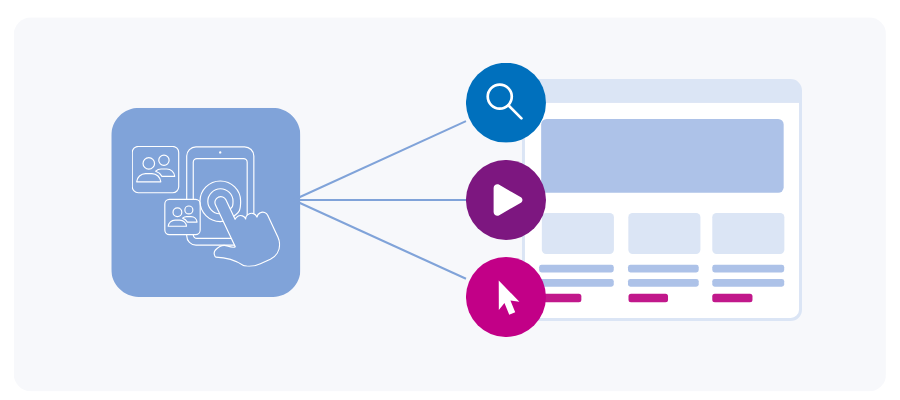
Curated audience activation across search, video, and native

For curation, that means a few things we take seriously. We are demand-side platform (DSP) agnostic. We don’t route buyers toward certain platforms because we have a financial stake in their success. We honor existing supply-side platform (SSP) relationships and build integrations that work across the agencies, brands, publishers, and technology platforms our clients already use. Our goal is to work inside your ecosystem, not compete with it.

Why neutrality is harder to find than it should be

Most players in the programmatic supply chain have built their business models around a specific position. DSPs optimize for platform retention, SSPs want a larger share of available supply, and walled gardens are designed to keep signal inside their environment.

Those are understandable business decisions. But they create conflicting incentives for anyone inside those structures who is also being positioned as a neutral curation partner.

Experian’s position is different. Our value grows when the ecosystem stays open and connected. That alignment shapes how we build, price, and go to market. It’s what makes genuine neutrality possible at scale.

Neutrality is what makes everything else trustworthy

Data quality, interoperability, and performance all matter in a curation partner. But none of those capabilities deliver their full value when the partner providing them has a stake in steering outcomes toward their own infrastructure.

Neutrality is the condition that makes the rest of the evaluation trustworthy.

For teams assessing curation partners right now, I’d start there. Ask how the partner makes money. Ask who benefits when you stay inside their ecosystem. Those answers will tell you a great deal about whether the relationship is actually built in your interest.


About the author

Head-and-torso portrait of a smiling adult man with short brown hair, wearing a white collared shirt layered under a dark sweater and black jacket, posed against a plain light gray background.

Kevin Dunn

Chief Revenue Officer, Experian

Kevin Dunn joins Experian Marketing Services with more than 20 years of leadership experience across marketing and advertising technology, most recently serving as Senior Vice President of Brands and Agencies at LiveRamp. In that role, he led growth across retail, CPG, travel, hospitality, financial services, and healthcare, overseeing new business, account expansion, and channel partnerships.

Kevin is known for building cohesive, accountable teams and leading with optimism, clarity, and a strong sense of shared purpose. His leadership philosophy centers on empowering people, driving positive outcomes for clients and fostering a culture where teams can grow, take smart risks, and succeed together.


Latest posts

A deep dive with an Experian partner, Psympl

Learn how Psympl and Experian use psychographic data to improve financial marketing, audience targeting, messaging, and engagement.

May 13, 2026 by Experian Marketing Services
The activation gap: Why good identity still falls short in market

Learn how brands can close the activation gap by carrying audience intelligence from identity to execution and outcomes across channels.

A deep dive with an Experian partner, ARF

In our Ask the Expert series, we interview leaders from our partner organizations who are helping lead their brands to new heights in AdTech. Today’s interview is with Samantha Zhang, Senior Data Scientist, and Jim Meyer, General Manager of the DASH TV Universe Study at the Advertising Research Foundation (ARF). DASH is an annual tracking study conducted by the ARF to define and better understand TV audience behavior and household dynamics. What does DASH measure, and how does it help the industry understand TV consumption today?  By capturing hundreds of individual- and household-level data points from each respondent in a rigorous and nationally projectable sample, DASH creates a comprehensive picture of U.S. consumer TV “infrastructure” – how America watches.  Core elements in DASHElements that create context in DASHTV setsLocation | brand | smartness | service modes | sources DemographicsConnected devices Game consoles |video players | streaming devicesYesterday viewing Daypart | TV/device genre | Out-of-home viewingMobile devicesOwners | sharing usersShoppingOnline and in-store | Exposure to major RMNsInternet serviceModes | ISPs | connectivity by device Streaming audio Streaming TVSVOD/AVOD tiers and sharing | FAST Email accounts and apps Live TV Modes of access | including casting from devices Social media For example, DASH gathers: Data on every TV set, including brand, room location, age, “smartness,” and connection devices and modes  Household connectivity and video service data, even in homes with no TV set Internet Service Providers (ISP) and TV service usage, including Multichannel Video Programming Distributors (MVPDs), virtual vMVPDs, streamers (ad-supported and premium), and Free Ad-Supported Television (FAST) channels  Person-level ownership and usage of video-capable mobile devices, including smartphones, tablets, and laptops  Measures of viewing and co-viewing across dayparts, devices, and services  Additional modules covering shopping and retail media networks, streaming audio, social media, email, and apps Broad coverage and granularity make DASH a uniquely robust source of truth for practitioners across the industry, including measurement experts and ad programming strategists. DASH also reports regularly (and publicly) on key industry dynamics. DASH identified a growing segment of device-only viewers – now nearly 9 million households that watch TV, but do not own a TV set – and highlighted the implications of that trend for traditional ratings systems based only on households with TV sets.  Households (HHs – million)2025 HHs (M) U.S. penetrationChange vs. 2024 (M)Total US134.8100%+2.7Connected TV (CTV)114.685%+2.1TV (Set)124.292.2%+1.1Device-only8.86.6%+1.6TV-Accessible133.198.7%+2.7 DASH called out the rise in app-based pay TV and proposed a new connection framework that better represents the modern TV world, in which linear and streaming overlap. DASH also defines the universes of households reachable with advertising. This graphic, for example, shows how all ad-supported linear and streaming properties in aggregate define the true scale of TV advertising. While 35 million households (and growing) are reachable only with streaming ads and 13 million (and falling) only with linear ads, most households are reachable with both, underscoring the importance of understanding the “overlap.” Who uses DASH data, and what decisions does it help inform? There are three primary users of DASH, each with its own use cases: Measurement providers, including Nielsen, use DASH to calibrate viewership data, turn household data into persons data (and vice versa) and estimate potential reached audiences–what the providers call media-related universe estimate (MRUEs)–for the calculation of ratings. Not surprisingly, measurement companies were the first to see the value that an independent TV universe study could provide. Media companies, including major broadcasters and streamers, use DASH to add context and color to their ad sales presentations – and to track the measurement providers, whose ratings play a major role in valuing ad inventory. AdTech companies, including Experian, use DASH to create high-value audience segments for activation. The recent accreditation of DASH by the Media Rating Council (MRC) and adoption by Nielsen as an input to its TV ratings have generated interest from a broad range of companies. We are actively pursuing new licensees and partners to make DASH more useful within, and even outside, the TV ecosystem. What does MRC accreditation signify, and why is it meaningful for DASH?  MRC accreditation means DASH passed a rigorous audit conducted by Ernst & Young over many months, which validated our methodology, controls, and data quality. MRC accreditation establishes that DASH is an industry-standard dataset.  While the service provider normally announces its own accreditation, the MRC took the unusual step of issuing its own release on DASH, announcing the accreditation of DASH for TV universe estimation and endorsing the study for broader, cross-media use. How does Experian use DASH data to build audiences?  The segments combine specific TV usage habits and behaviors from DASH with Experian data on demographics, spending, and other contextual inputs to create a fuller view of consumer viewing behavior. They are designed to be valuable to advertisers in many categories and planning contexts – and to be customizable to fit advertisers’ media targets. The segments can be used to: Apply or suppress audiences to improve target coverage across a campaign  Better align media and creative  Reach elusive but high-value viewers, such as Ad Avoiders  Drive valuable consumer behavior  Achieve specific advertising objectives What are some practical use cases for DASH-based audiences?  Here are some practical use cases for four different kinds of DASH segments in five different advertiser categories.  Travel Co-WatchersA couples-only resort uses TV Co-Watching Households without Children to strengthen target reach and ad memory recallA big theme park destination uses TV Co-Watching Households with Children to reach families in moments of togetherness Home Entertainment TV Owners and Brand LoyalistsA premium TV manufacturer uses the overlap of Multi Brand TV Owners and Single Brand TV Loyalist Households to market its newest TV model to its most loyal consumers. Fast Food Screen Size ViewersA fast food chain with a high-impact new brand campaign uses Large Screen TV Viewers to better align the media and  creativeThat same fast food chain uses Small-Screen TV Viewers to drive store traffic by increasing exposure of its retail campaign among on-the-go viewers Financial Services Cord Cutters A personal cost management app and a cash-back credit card target Streaming-First Cord Cutter Households to reach young, tech-savvy, cost-conscious consumers Thanks for the interview. Where can readers learn more about DASH? We started work on DASH seven years ago, and it’s been fun to watch it “grow up.” Our partnership with Experian is a big step toward putting DASH to work for advertisers and agencies. To learn more, visit our site at https://theARF.org/DASH or contact us at DASH@theARF.org. Contact us About our experts Samantha Zhang, Senior Data Scientist at ARF Samantha Zhang is a Senior Data Scientist at the Advertising Research Foundation working on the DASH TV Universe Study, with additional research spanning areas including attention measurement, digital privacy, and artificial intelligence.  Jim Meyer, General Manager, DASH, at ARF Jim Meyer is general manager and co-founder of the ARF DASH TV Universe Study and managing partner of Golden Square, LLC, which advises media and research technology companies on growth strategy and development. Latest posts

April 30, 2026 by Experian Marketing Services