Marketers are under more pressure than ever to deliver personalized, high-performing campaigns—while navigating tighter budgets, shifting privacy expectations, and fragmented tech stacks. Despite an explosion of tools and data sources, the fundamentals of marketing haven’t changed.
Every great campaign still starts with a simple question: Who are we trying to reach?
The answer depends on how well you understand your customers. Increasingly, that understanding is hampered by data silos, inconsistent identity signals, and disconnected workflows between planning, activation, and measurement. When those pieces don’t align, it leads to inefficient spending, incomplete insights, and missed opportunities.
To move forward, marketers need more than better tools—they need a more connected approach.
Start with a complete view of the customer
The foundation of effective marketing is understanding your audience—not just who they are, but what they care about and how to reach them across devices and platforms.
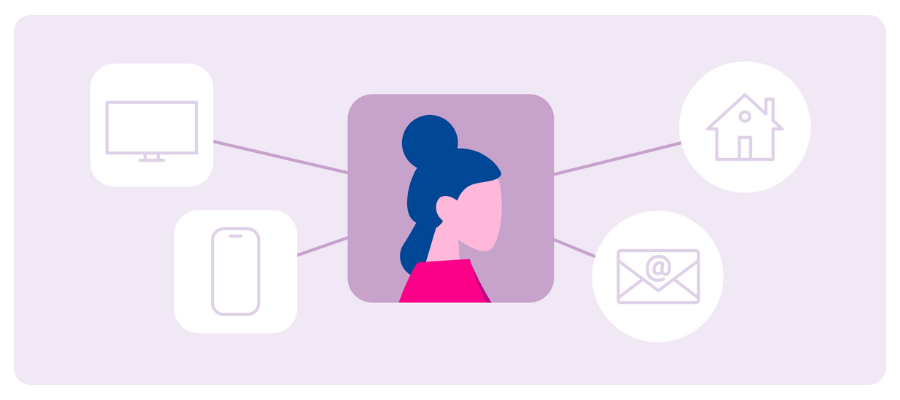
That starts with building a complete customer profile. For many marketers, this means linking persistent offline data—such as name and address—with fresh digital signals like device IDs and online behaviors. When combined, these elements provide a high-fidelity view of the customer that can be enriched with attributes like demographics, purchase behavior, and lifestyle interests.
This kind of profile doesn’t just help you understand people—it helps you build audience segments that actually perform. Whether you’re working with your own CRM data or third-party sources, the ability to create addressable segments that are both accurate and scalable is what separates good campaigns from great ones.
🛳️ That’s exactly what MMGY did for Windstar Cruises. By layering first-party data with behavioral and demographic insights, they built custom audiences that more than doubled campaign benchmarks.
🎮 Gaming platform Unity tapped into Experian audiences to understand player behaviors across web, mobile, and connected TV (CTV). These insights helped their advertisers reach gaming audiences more effectively—tailoring creative and delivery to real-world preferences, not assumptions.
Activate with precision, not just volume
Knowing your audience is only half the battle. The next challenge is reaching them—consistently and efficiently—across multiple channels.

This is where fragmentation can creep back in. All too often, marketers build audiences in one system, but activate in another, causing data loss and targeting mismatches. A more connected strategy uses the same identity and audience spine across planning and activation, reducing signal loss and improving accuracy.
👉 Curated private marketplaces (PMPs), for example, allow marketers to match high-quality audiences with premium inventory in a targeted, transparent, and efficient way. These deals let marketers align their spending with their goals—whether that’s lowering cost-per-acquisition or boosting reach in a key vertical.
Performance results are bearing this out:
When identity, audience, and inventory are aligned, everyone benefits—marketers, publishers, and consumers.
Measure what matters
Too often, measurement is treated as an afterthought. But in a connected campaign, it’s built in from the beginning.
By using consistent identity across planning, activation, and measurement, marketers can connect ad exposure to real-world outcomes—whether that’s an online conversion, an in-store visit, or a new customer relationship.
This kind of closed-loop measurement turns marketing into a learning engine. You don’t just see what happened—you understand why it happened and can use that information to improve the next campaign.
🛳️ In the case of Windstar Cruises, MMGY used Experian identity to precisely measure how digital ad exposures translated into bookings. That kind of visibility gives marketers more than a report card. It gives them the feedback they need to optimize smarter next time—and prove ROI every time.
The future is connected
To meet today’s demands, marketers need a new way of working—one that starts with a complete understanding of the customer, builds addressable audiences on a strong identity foundation, activates them precisely across channels, and measures impact in real time.
The marketers embracing this approach are already seeing results: stronger performance, more efficient spending, and deeper insights that power what comes next.
The future won’t be built on more tools—it will be built on more connection.
Connect with us
Latest posts

The stakes are high when it comes to advertising during football’s biggest games as the cost of advertising continues to rise, with the average 30-second TV ad during the 2023-24 Sunday Night Football season priced at $882K. With record viewership at the College Football Playoff and the Super Bowl drawing in 123.7 million average viewers, the largest TV audience on record, it's no surprise that brands are willing to pay those prices since football games are prime time for reaching engaged audiences. In fact, an estimated 51% of viewers search for an ad they saw during the game, underscoring the potential of second-screen engagement to amplify campaign impact. Whether you advertise on TV during these games or not, brands are exploring how they can use football season to drive a deeper connection to their audience. To do this, brands need data driven strategies. In this blog post, we’ll reveal audience segments designed for you to craft tailored marketing strategies that resonate with football fans in the stands and on the couch. You can find the complete audience segment name in the appendix. Make a game-winning play with Experian Audiences With playoff season fast approaching, it’s the perfect time to go on the offensive and target football fans. Utilize Experian’s syndicated audiences to ensure your marketing messages resonate with fans when they're the most engaged. Experian’s 2,400+ syndicated audiences are available directly on over 30 leading television, social, programmatic advertising platforms, and directly within Audigent for activation within private marketplaces (PMPs). Reach consumers based on who they are, where they live, and their household makeup. Experian ranked #1 in accuracy by Truthset for key demographic attributes. Access to unique audiences through Experian’s Partner Audiences available on Experian’s data marketplace, within Audigent for activation in PMPs and directly on platforms like DirectTV, Dish, Magnite, OpenAP, and The Trade Desk. Four football audience categories to add to your advertising lineup Football fans come in all shapes, sizes, and viewing habits. From dedicated supporters to casual viewers, targeting the right audience can make or break your campaign. Here are four football audience categories you can target: Sports enthusiasts College football fans 21+ audiences TV viewers Let’s huddle up and break down the audience segments within each category. Whether it’s tailgating, tuning in, or cheering from the stands, these insights will get your campaign into the end zone. Sports enthusiasts Whether they’re following their favorite teams, attending games in person, or watching professional sports events on TV, football fans are deeply engaged, making them an ideal target for advertisers looking to score big. Here are five audiences to target: NFL Enthusiasts Football (FLA/Fair Lending Friendly)1 Sports Enthusiasts NFL Stadium Visitors Professionals Sports Event College football fans College football fans bring unmatched passion and loyalty, with bowl games during the 2023 season drawing on average of 4.6 million viewers across 40 total games—a 5% increase year-over-year. From students to alumni, these fans represent an invaluable opportunity for advertisers to connect with a deeply invested audience. Here are four audiences to target to connect with passionate college football fans: College Football Stadium Visitors College Football Bowls College Students College Sports Venues 21+ audiences With 84% of U.S adults reporting that they drink alcohol while watching football on TV, targeting 21+ audiences during game season is a winning play. Whether they’re cracking open a cold one at a tailgate, hosting a game-day party, or relaxing on the couch, these audiences represent a key audience for brands looking to tap into football culture. Here are four audiences that you can target this post season: Imported Light Beer Enthusiasts Domestic/Imported Beer High-end Spirit Drinkers Discretionary spend: Alcohol and wine $331 – $726 These audiences can help you serve up campaigns that pour directly into the heart of football fandom. TV viewers Football games attract some of the most engaged and diverse TV audiences, with 85% of sports fans preferring to watch live sports on TV rather than in-person. Notably, for the first time, viewers aged 18 to 49 spent the majority of their sports viewing time (54%) via streaming. This shift highlights the immense opportunity for advertisers to connect with highly attentive viewers tuned into every play. Here are seven audiences that you can use to create a game-winning strategy to reach engaged TV watching football fans: Cable Satellite or Streaming Network Subscribers Streaming Video: High Spenders Cord Cutters Cable and Streaming TV Service Subscribers Paid TV High Spenders Screen Size – Large Co-Watchers Whether they're catching the action on a large TV screen or streaming from their phone, these audiences will help you craft campaigns that deliver results with highly engaged viewers. Score big with Experian this postseason As some of football’s biggest games approach, it’s time to huddle up and connect with consumers who live for the thrill of the game. Whether they’re tuning in to cheer for their favorite teams, tailgating with friends, or enjoying the game-day experience from home, Experian Marketing Data provides the playbook to score big with targeting, enrichment, and activation. With Experian’s data-driven insights, you can turn every opportunity into a game-winning play! Need a custom audience? Reach out to our audience team and we can help you build and activate an Experian audience on the platform of your choice. Additionally, work with Experian’s network of data providers to build audiences and send to an Audigent PMP for activation. Connect with our audience team Connect with us You can activate our syndicated audiences on-the-shelf of most major platforms. For a full list of Experian’s syndicated audiences and activation destinations, download our syndicated audiences guide. Explore our other seasonal audiences that you can activate today. View now 1 “Fair Lending Friendly” indicates data fields that Experian has made available without use of certain demographic attributes that may increase the likelihood of discriminatory practices prohibited by the Fair Housing Act (“FHA”) and Equal Credit Opportunity Act (“ECOA”). These excluded attributes include, but may not be limited to, race, color, religion, national origin, sex, marital status, age, disability, handicap, family status, ancestry, sexual orientation, unfavorable military discharge, and gender. Experian’s provision of Fair Lending Friendly indicators does not constitute legal advice or otherwise assures your compliance with the FHA, ECOA, or any other applicable laws. Clients should seek legal advice with respect to your use of data in connection with lending decisions or application and compliance with applicable laws. Appendix Sports enthusiasts Lifestyle and Interests (Affinity) > Activities and Entertainment > NFL Enthusiasts Lifestyle and Interests (Affinity) > Sports and Recreation > Sports Enthusiast Mobile Location Models > Visits > NFL Stadium Visitors Lifestyle and Interests (Affinity) > Sports > Football (FLA / Fair Lending Friendly)2 Travel Intent > Activities > Professional Sports Event College sports fans Mobile Location Models > Visits > University Stadium College Football Visitor Lifestyle and Interests (Affinity) > Sports > College Football Bowls Mobile Location Models > Visits > College Students Mobile Location Models > Visits > College Sport Venues 21+ audiences Lifestyle and Interests (Affinity) > Activities and Entertainment > Imported Light Beer Enthusiasts Lifestyle and Interests (Affinity) > In-Market > Domestic/Imported Beer Lifestyle and Interests (Affinity) > Retail > High-end Spirit Drinkers Financial – Analytics IQ > Discretionary Spend > Alcohol and Wine: $331-$726 TV viewers Television (TV) > Household/Family Viewing > Cable Satellite or Streaming Network Subscribers Retail Shoppers: Purchase Based > Entertainment > Streaming/Video/Audio/CTV/Cable TV: Streaming Video: High Spenders Television (TV) > Household/Family Viewing > Cord Cutters Television (TV) > Household/Family Viewing > Cable and Streaming Service Subscribers Television (TV) > TV Enthusiasts > Paid TV High Spenders Television (TV) > Viewing Device Type > Screen Size – Large Television (TV) > Household/Family Viewing > Co-Watchers Latest posts

As marketers face growing signal fragmentation, Experian has launched a data marketplace that brings addressability, interoperability, and identity resolution into one activation-ready platform. Download the overview to see how our data marketplace connects high-quality identity to scalable activation across all screens. Download the overview Why does cross-channel audience consistency matter? Marketers plan campaigns to reach people wherever they watch, browse, and engage. Consistent identity allows those plans to carry across screens without fragmentation. Experian’s data marketplace starts with identity. Our data marketplace is built on our best-in-class identity graph which includes 126 million U.S. households, 250 million individuals, and more than four billion active digital IDs. This foundation supports reliable audience connections across channels and devices. What distinguishes Experian's data marketplace? Experian connects the entire ecosystem — TV operators, programmers, supply-side platforms (SSPs), demand-side platforms (DSPs), and brands — with activation-ready audiences that drive measurable performance. Buyers can access data from retail, CPG, healthcare, B2B, location intelligence, and more. Our audiences are built on verified offline data, which means they're grounded in real-world accuracy, not just digital assumptions. When you activate through our marketplace, you: Reach relevant audiences across screens Maintain accuracy at scale Support addressability as media environments evolve Whether you're running a campaign on connected TV (CTV), mobile, or display, we help you show up in the right place, to the right person, at the right time. Related reading Four CTV advertising misconceptions marketers need to drop "Experian has been a longstanding partner of DISH Media, and we’re excited to be an early adopter of their marketplace which leverages the foundation of their identity solutions to ensure maximum cross-channel reach as we look to expand the breadth and depth of data we use for addressable TV."Kemal Bokhari, Head of Data, Measurement & Analytics Want a quick overview of Experian's data marketplace? Watch our video for a quick overview of how Experian's data marketplace works. How does Experian's data marketplace support buyers, sellers, and platforms? Our data marketplace streamlines how teams plan, distribute, and activate data. Buyers and sellers align workflows while maintaining scale and accountability. Here’s how it delivers: Enhances addressability and match rates All audiences delivered from our marketplace benefit from our best-in-class offline and digital identity graphs, which ensure addressability across all channels like display, mobile, and CTV. Unlike other data marketplaces, Experian ensures all identifiers associated with an audience have been active and are targetable, improving the accuracy of audience planning. Simplifies audience planning and distribution for TV Operators TV operators can build custom audiences matched directly to their subscriber footprint and distribute them across all advanced TV channels (data-driven linear, addressable, digital, and CTV) for maximum impact. Reintroduces choice within the data marketplace ecosystem With the departure of Oracle’s advertising business, the optionality for buyers and sellers to connect with third-party data has become increasingly limited. With Experian's data marketplace, we’re excited to offer a new solution to the market that ensures data-driven targeting can continue to take place at scale. Reduces activation costs Experian’s data marketplace offers transparent, pass-through pricing with no additional access fees, enabling partners to maximize their earnings while reducing costs. Expands audience diversity and scale Platforms can access a broad range of audiences across top verticals from our partner audiences, which can be combined with 3,500+ Experian Audiences. This offers the flexibility, reach, and scale necessary to effectively execute advertising campaigns. Which data partners participate in Experian's data marketplace? Our data marketplace includes premium data from partners such as Alliant, Attain, Circana, Dun & Bradstreet, and more. Buyers activate these audiences alongside Experian Audiences within one workflow. “Circana and Experian have enjoyed a deep partnership for over a decade. We are exceedingly excited to extend our partnership and be an early adopter and launch partner of the Experian data marketplace. This additional capability will enable the ecosystem to more easily access Circana’s purchase-based CPG and General Merchandise (for example Consumer Electronics, Toys, Beauty, Apparel etc.) audience segments to drive performance outcomes across all media channels.”Patty Altman, President, Global Solutions “Capturing the attention of target audiences across channels is critical for marketers navigating an increasingly connected digital world. We are excited to be an exclusive provider of B2B solutions within Experian’s marketplace, helping brands and media agencies to accelerate their reach, addressability and targeting capabilities across TV, mobile and connected TV channels.” Georgina Bankier, VP of Platform Partnerships Q&A with Attain Q&A with Circana Q&A with Webbula How Yieldmo drove in-store traffic for an athletic retailer with Experian's data marketplace Yieldmo, a leading SSP known for its AI-powered creative formats and privacy-forward inventory, partnered with Experian to support an athletic retailer focused on in-store traffic during key sales periods. The team identified high-intent shoppers and activated them across channels. Using our data marketplace, Yieldmo combined Experian Audiences with partner segments from Alliant, Circana, Webbula, and Sports Innovation Lab. This approach allowed the team to: Identify in-store and conquest segments quickly Combine first- and third-party audiences in one place Improve match rates and cross-channel addressability Deliver measurable foot traffic lift “Experian’s data marketplace fills a critical gap, letting us quickly search by brand, build smarter conquest segments, and activate audiences fast. The platform is flexible and the support is hands-on and reliable.”Abby Littlejohn, Director of Sales Planning The campaign delivered faster setup, tailored audiences, and strong in-store performance with less manual effort. Download the full case study Learn more about our solutions for SSPs Get started with Experian's data marketplace Experian’s data marketplace, easily accessible from our Audience Engine platform, brings unparalleled addressability, enabling our clients to reach more relevant consumers and increase revenue. Talk to our team if you’re interested in learning more about our new data marketplace or becoming an active buyer or seller, or download our overview to learn more. FAQs What is Experian’s data marketplace? Experian’s data marketplace is a centralized, activation-ready platform that allows TV operators, programmers, supply partners, and demand platforms to access and activate high-quality, privacy-compliant audiences across CTV, mobile, and display. It supports both first-party onboarding and third-party audience activation. Who is the Experian data marketplace designed for? The Experian data marketplace is built for TV operators, programmers, supply partners, and demand platforms looking to improve audience targeting, match rates, and addressability across fragmented digital environments. What types of audiences are available in the Experian data marketplace? The Experian data marketplace offers a mix of Experian proprietary audiences and third-party data partner segments across verticals like retail, CPG, B2B, healthcare, financial services, and location intelligence. Users can activate over 3,500 Experian Audiences and premium partner segments from providers like Alliant, Attain, Circana, Dun & Bradstreet, Webbula, and more. How does Experian ensure addressability and match rate performance? Experian’s data marketplace is powered by our identity graphs which are rooted in verified offline data, spanning 126 million U.S. households, 250 million individuals, and over four billion active digital identifiers. This foundation ensures that audiences are accurate, actively targetable, and optimized for high match rates across CTV, mobile, and display platforms. Is Experian’s data marketplace privacy-compliant? Yes. All data in the Experian data marketplace is subject to Experian’s rigorous partner review process to ensure compliance with federal, state, and local consumer privacy regulations. Privacy and data stewardship are foundational to our data marketplace’s design. What makes Experian’s data marketplace different from other data marketplaces? Experian’s data marketplace stands out for its focus on audience accuracy, partner integration, privacy compliance, and deep identity expertise. Here’s how we’re different: – Accurate audience planning: Unlike many other marketplaces, Experian ensures that all identifiers tied to an audience are verified as active and targetable — improving match rates and reducing waste. – Seamless partner audience integration: In one platform, you can activate Experian Audiences alongside premium segments from our growing partner network — including Alliant, Attain, Circana, and more. – Privacy and compliance built in: Every partner and audience goes through Experian’s rigorous review process to meet federal, state, and local consumer privacy laws — so you can activate with confidence. – Trusted identity foundation: Experian’s identity graph is grounded in decades of offline data expertise, powering more reliable targeting and activation than marketplaces built solely on digital signals. Where can I learn more or get started? You can download the overview to explore the capabilities, or contact our team to become an active buyer or seller. The Experian data marketplace is available through Experian’s Audience Engine platform. Latest posts

2024 marked a significant year. AI became integral to our workflows, commerce and retail media networks soared, and Google did not deprecate cookies. Amidst these changes, ID bridging emerged as a hot topic, raising questions around identity reliability and transparency, which necessitated industry-wide standards. We believe the latest IAB OpenRTB specifications, produced in conjunction with supply and demand-side partners, set up the advertising industry for more transparent and effective practices. So, what exactly is ID bridging? As signals, like third-party cookies, fade, ID bridging emerged as a way for the supply-side to offer addressability to the demand-side. ID bridging is the supply-side practice of connecting the dots between available signals, that were generated in a way that is not the expected default behavior, to understand a user’s identity and communicate it to prospective buyers. It enables the supply-side to extend user identification beyond the scope of one browser or device. Imagine you visit a popular sports website on your laptop using Chrome. Later, you use the same device to visit the same sports website, but this time, on Safari. By using identity resolution tools, a supply-side partner can infer that both visits are likely from the same user and communicate with them as such. ID bridging is not inherently a bad thing. However, the practice has sparked debate, as buyers want full transparency into the use of a deterministic identifier versus an inferred one. This complicates measurement and frequency capping for the demand-side. Before OpenRTB 2.6, ID bridging led to misattribution as the demand-side could not attribute ad exposures, which had been served to a bridged ID, to a conversion, which had an ID different from the ad exposure. OpenRTB 2.6 sets us up for a more transparent future In 2010, the IAB, along with supply and demand-side partners, formed a consortium known as the Real-Time Bidding Project for companies interested in an open protocol for the automated trading of digital media. The OpenRTB specifications they produced became that protocol, adapting with the evolution of the industry. The latest evolution, OpenRTB 2.6, sets out standards that strive to ensure transparency in real-time bidding, mandating how the supply-side should use certain fields to more transparently provide data when inferring users’ identities. What's new in OpenRTB 2.6? Here are the technical specifications for the industry to be more transparent when inferring users’ identities: Primary ID field: This existing field now can only contain the “buyeruid,” an identifier mutually recognized and agreed upon by both buyer and seller for a given environment. For web environments, the default is a cookie ID, while for app activity, it is a mobile advertising ID (MAID), passed directly from an application downloaded on a device. This approach ensures demand-side partners understand the ID’s source. Enhanced identifier (EID) field: The EID field, designated for alternative IDs, now accommodates all other IDs. The EID field now has additional parameters that provide buyers transparency into how the ID was created and sourced, which you can see in the visual below: Using the above framework, a publisher who wants to send a cross-environment identifier that likely belongs to the same user would declare the ID as “mm=5,” while listing the potential third-party identity resolution partner under the “matcher” field, which the visual below depicts. This additional metadata gives the demand-side the insights they need to evaluate the reliability of each ID. "These updates to OpenRTB add essential clarity about where user and device IDs come from, helping buyers see exactly how an ID was created and who put it into the bidstream. It’s a big step toward greater transparency and trust in the ecosystem. We’re excited to see companies already adopting these updates and can’t wait to see the industry fully embrace them by 2025."Hillary Slattery, Sr. Director, Programmatic, Product Management, IAB Tech Lab Experian will continue supporting transparency As authenticated signals decrease due to cookie deprecation and other consumer privacy measures, we will continue to see a rise in inferred identifiers. Experian’s industry-leading Digital Graph has long supported both authenticated and inferred identifiers, providing the ecosystem with connections that are accurate, scalable, and addressable. Experian will continue to support the industry with its identity resolution products and is supportive of the IAB’s efforts to bring transparency to the industry around the usage of identity signals. Supply and demand-side benefits of adopting the new parameters in OpenRTB 2.6 Partner collaboration: Clarity between what can be in the Primary ID field versus the EID field provides clear standards and transparency between buyers and sellers. Identity resolution: The supply side has an industry-approved way to bring in inferred IDs while the demand side can evaluate these IDs, expanding addressability. Reducing risk: With accurate metadata available in the EID field, demand-side partners can evaluate who is doing the match and make informed decisions on whether they want to act on that ID. Next steps for the supply and demand-sides to consider For supply-side and demand-side partners looking to utilize OpenRTB 2.6 to its full potential, here are some recommended steps: For the supply-side: Follow IAB Specs and provide feedback: Ensure you understand and are following transparent practices. Ask questions on how to correctly implement the specifications. Vet identity partners: Choose partners who deliver the most trusted and accurate identifiers in the market. Be proactive: Have conversations with your partners to discuss how you plan to follow the latest specs, which identity partners you work with, and explain how you plan to provide additional signals to help buyers make better decisions. We are beginning to see SSPs adopt this new protocol, including Sonobi and Yieldmo. “The OpenRTB 2.6 specifications are a critical step forward in ensuring transparency and trust in programmatic advertising. By aligning with these standards, we empower our partners with the tools needed to navigate a cookieless future and drive measurable results.” Michael Connolly, CEO, Sonobi These additions to the OpenRTB protocol further imbue bidding transactions with transparency which will foster greater trust between partners. Moreover, the data now available is not only actionable, but auditable should a problem arise. Buyers can choose, or not, to trust an identifier based on the inserter, the provider and the method used to derive the ID. While debates within the IAB Tech Lab were spirited at times, they ultimately drove a collaborative process that shaped a solution designed to work effectively across the ecosystem.”Mark McEachran, SVP of Product Management, Yieldmo For the demand side: Evaluation: Use the EID metadata to assess all the IDs in the EID field, looking closely at the identity vendors’ reliability. Select partners who meet high standards of data clarity and accuracy. Collaboration: Establish open communication with supply-side partners and tech partners to ensure they follow the best practices in line with OpenRTB 2.6 guidelines and that there’s a shared understanding of the mutually agreed upon identifiers. Provide feedback: As OpenRTB 2.6 adoption grows, consistent feedback from demand-side partners will help the IAB refine these standards. Moving forward with reliable data and data transparency As the AdTech industry moves toward a cookieless reality, OpenRTB 2.6 signifies a substantial step toward a sustainable, transparent programmatic ecosystem. With proactive adoption by supply- and demand-side partners, the future of programmatic advertising will be driven by trust and transparency. Experian, our partners, and our clients know the benefits of our Digital Graph and its support of both authenticated and inferred signals. We believe that if the supply-side abides by the OpenRTB 2.6 specifications and the demand-side uses and analyzes this data, the programmatic exchange will operate more fairly and deliver more reach. Contact us Latest posts