In 2025, financial institutions grappled with acceleration – faster digital journeys, faster fraud, and faster AI adoption. As we go into 2026, the challenge has shifted. Speed is no longer the differentiator. Instead, control, confidence, and accountability are driving investment.
Experian’s Global Insights 2026: Predictions for credit and fraud risk explores how organisations are responding to rapid change by moving from experimental innovation to accountable intelligence that is connected, governed and trusted at scale.
Grounded in analyst insight, Experian research, and market signals, the report identifies seven shifts that will define the year ahead.
1. Making AI deliver through accountability and governance
The optimism that fuelled generative AI (GenAI) adoption throughout 2024 and 2025 has evolved into a more disciplined focus on performance, return on investment, and operational integrity.
In 2026, organisations are no longer asking what AI can do; they are asking whether it delivers measurable value, integrates safely into core workflows, and can be governed with confidence. For many organisations, this reality check has already arrived. AI that cannot demonstrate value or withstand governance scrutiny will struggle to scale.
2.The agentic ecosystem transforms enterprise automation
Early agentic AI deployments show promise in automating tasks and accelerating workflows. But as adoption grows, so does complexity.
In 2026, organisations will focus less on individual agents and more on how agents are orchestrated, governed and integrated. Agent frameworks will become commonplace, but differentiation will come from platforms that can orchestrate data, enforce policy and maintain consistency across every automated workflow.

3. Fraud and identity risks intensify, demanding layered, intelligent orchestration
Consumers are increasingly relying on AI tools to guide financial decisions, marking the early stages of AI-mediated customer journeys. Fraudsters are already exploiting the gaps created as AI and automation accelerate.
In 2026, identifying who (or what) is on the other side of a digital interaction is becoming harder. GenAI has rendered voice authentication unreliable through advanced voice cloning, while deepfake videos undermine visual trust. Autonomous AI agents are beginning to act on behalf of humans in everyday transactions, often indistinguishable from malicious bots. In this environment, traditional identity checks simply cannot keep pace. Identity verification must evolve from static checks to continuous, contextual validation.
4. Quality and connectivity of data define intelligent credit
AI is only as effective as the data that powers it. In 2026, data quality, lineage and governance take centre stage. Businesses building explainable AI require reliable, well-structured data that can be traced, audited, and updated in real-time.
The ability to orchestrate all data sources within a single, high-quality ecosystem will determine the success of every credit and fraud decision. In an AI-driven world, data quality and integration are the most powerful levers of performance and trust.
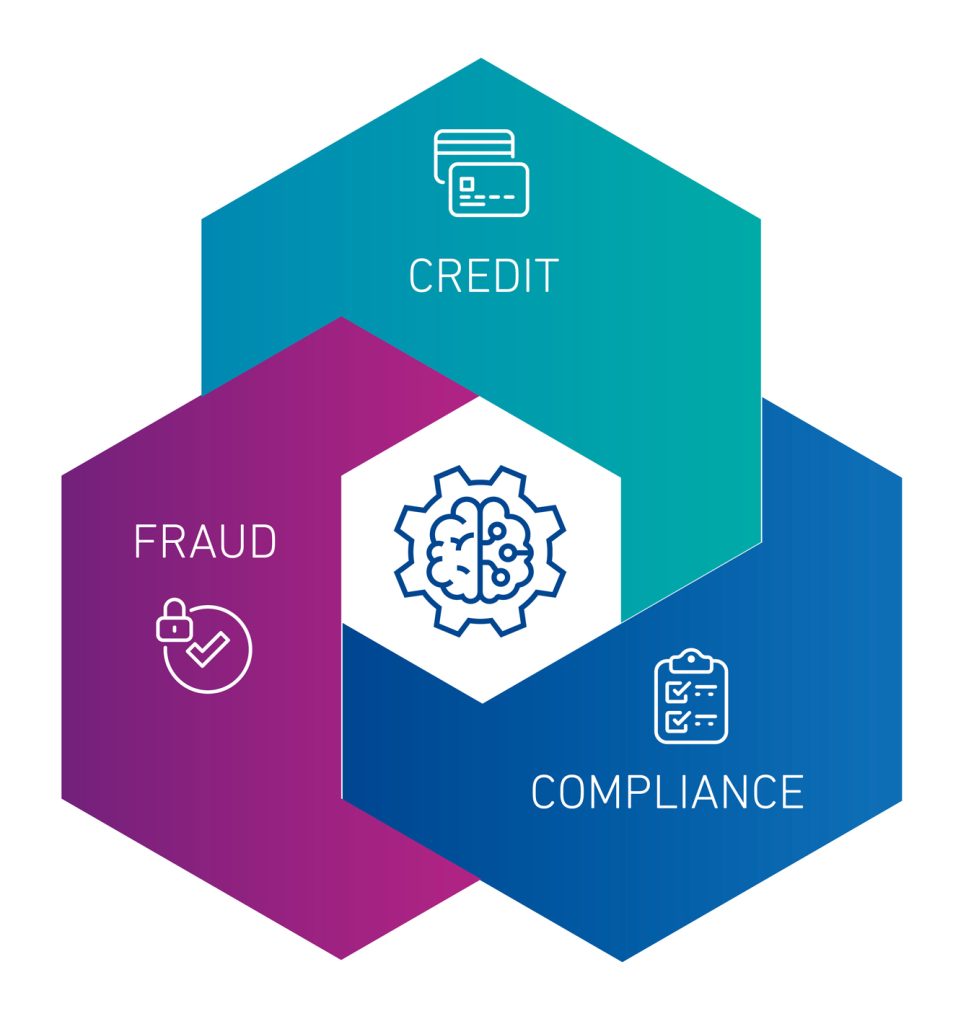
5. Credit, fraud and compliance converge into unified intelligence
Historically separate risk functions are now converging as financial institutions pursue consistent decisions, lower operating costs and stronger governance. This shift is driven by both regulatory pressure and operational necessity.
By breaking down silos, financial institutions can not only strengthen risk management but also unlock better financial opportunities for their customers, creating a more secure and seamless ecosystem.
6. Partnerships and integration drive growth
In 2026, platform strategy becomes inseparable from partnership strategy. No lender can access every data source or defend against every threat alone. The winning model is collaborative, modular and interoperable.
Businesses are recognising that partnerships are no longer optional; they define coverage, scalability and the ability to participate in agent-enabled ecosystems where identity, data and payment layers work together seamlessly.
7. The credit lifecycle becomes frictionless and human-verified
The credit lifecycle is evolving in response to shifting consumer behaviour and rapidly changing technology, becoming both automated and human-centred. In 2026, this evolution begins to take shape through customer journeys, where identity is continuously verified, fraud controls adapt in real time, decisions are explainable, and consumers experience interactions that feel both effortless and trustworthy.
The capabilities that will drive success in 2026
As 2026 unfolds, organisations face an environment defined by accountable AI, converging risk functions, rising fraud threats, and the emergence of agent-driven ecosystems. Success will depend on the ability to seamlessly orchestrate data, identity and intelligence, while keeping people at the centre of oversight and accountability.
Download the full Global Insights 2026: Predictions for credit and fraud risk report