Business Credit Education

articles and videos about business credit education
Loading...

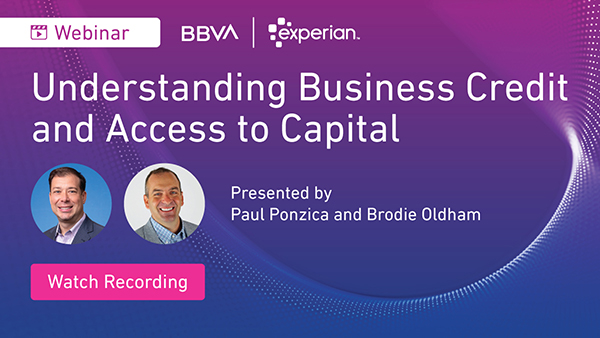
Experian and BBVA will be discussing how small businesses can build strong credit to gain access to capital in an upcoming webinar.

Published: October 6, 2020 by Gary Stockton

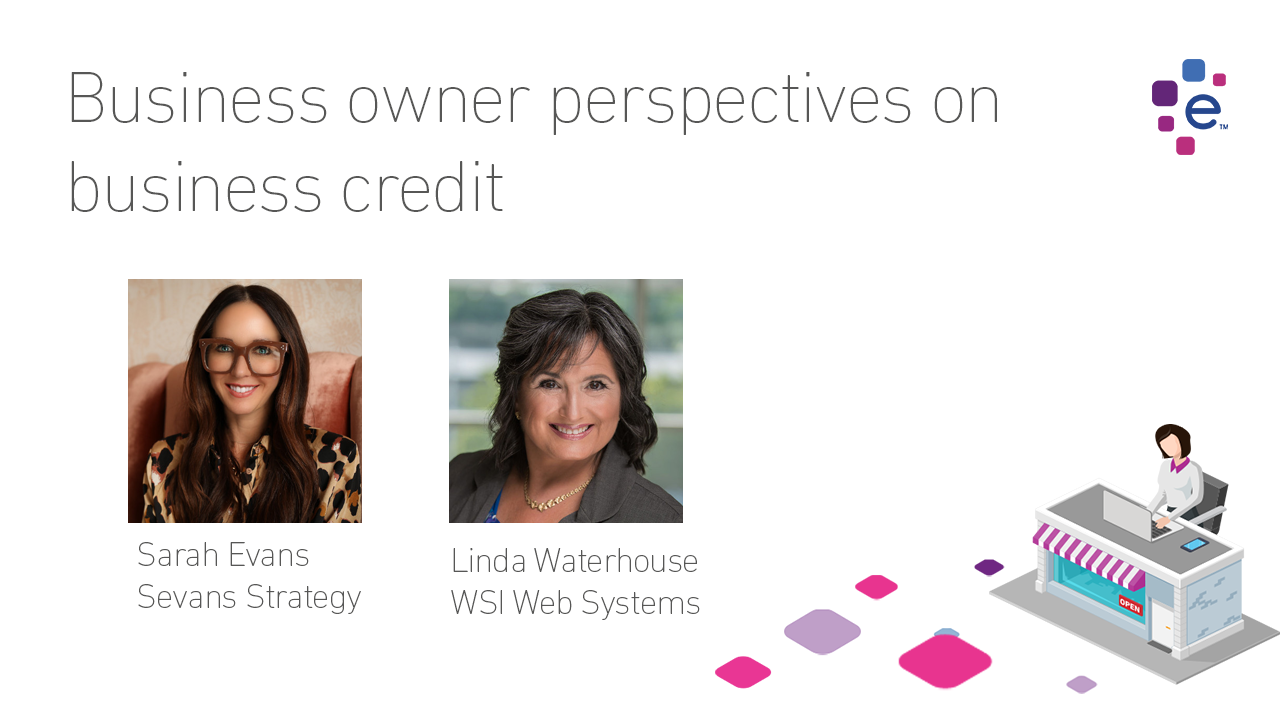
Experian has just released the Women in Business credit study, a three year study of around 2.8 million credit files for small business owners. One of the key findings in this study was women business owners, in particular, are reliant upon personal forms of credit, and they may be at a disadvantage through this practice. In the below video, Experian talked with Sarah Evans, owner of Sevans Strategy, a digital PR agency and Linda Waterhouse, owner of WSI Web Systems, to get their perspectives on managing credit, and some of the insights revealed in the Experian study. Click below to learn more about the Women in Business credit study.

Published: June 25, 2019 by Gary Stockton

Experian Business Information Services was delighted to participate in a #CreditChat tweet chat recently. For the chat, we compiled some answers to frequently asked questions about business credit. Why should you separate business credit from personal credit? How do you establish business credit? Is it possible to build business credit with poor credit How do you get a business credit report? How are business credit scores determined How do you correct or dispute information on your business credit report? How do you get higher limits for your business credit? Five tips for establishing, building and monitoring business credit.   Why should you separate business credit from personal credit If your business ever becomes at risk your personal credit score becomes at risk as well. And so maintaining separation can protect your personal credit profile should a financial mishap occur in the company or vice versa. Building separation between the two can also help your business develop the credibility that matters the bank's, lenders, suppliers and partners. How do you establish business credit? One of the first things you can do to establish small business credit is to file your business with your State by forming a corporation or LLC to operate your business under and obtain a FIN or EIN number from the IRS. Of course, comply with the business credit market requirements by obtaining proper licenses state and federal requirements for your business. Also,  act as a business by establishing accounts (telephone utilities, leases, loans) all under the business name, not your personal name. Even if you operate as a sole proprietor or as a home-based office,  prepare financial statements and a professional business plan. Be visible. Find companies willing to grant credit to your business without a personal guarantee. This is typically referred to as Trade Credit. Ensure that your good payment behavior is reported to Experian. Ask suppliers and other businesses that extend your business credit or payment terms to consistently report your payment history to Experian. Also, borrow and then pay on time.  Manage your debt, stay current to your terms by making on-time payments and don't rely just on small business credit cards. Secure terms from suppliers or take out a commercial loan. And lastly, monitor your business credit report regularly check and correct outdated information. Be alert to important credit changes in your company's name. Is it possible to build business credit with poor credit? If you have poor credit, you know, it's never too early to enable healthy management behaviors of separating personal from business credit risk and building business credit. But in the early startup stages, you may need to personally guarantee payments. But, the more you act like a business by establishing accounts in your business name, the more likely it is that you'll be able to negotiate and secure good credit terms without personal guarantees. How do you get a business credit report? Experian offers instant online access to business credit reports at the following websites: Experian.com/mybusinesscredit SmartBusiness Reports.com These sites easily help you monitor your own report or access a report on other businesses you can purchase a single report as needed or save with a subscription to a plan. How are business credit scores determined Experian collects business credit data from a wide range of sources such information is used to create a score that illustrates how your businesses historically met its financial obligations. This helps creditors to decide whether to extend credit to your company. Some of those sources include State Filing Offices, Public Records,  Credit Card Companies,  Collection Agencies, Corporate Financial Information, and Marketing Databases. If you are curious about the behaviors that impact your credit score you can always access our Score Planner Tool. This is a free tool that Experian offers. You can get in there and do what-if scenarios, modeling your current credit behavior and how that impacts your business credit score. It is a very useful tool and helps you build smart business credit. How do you correct or dispute information on your business credit report? First, you must have a copy of your business credit report. You can download that instantly at Experian.com/mybusinesscredit or SmartBusinessReports.com. Of course, review the details circling any incorrect information and you would submit that to BusinessDisputes@experian.com for investigation. That will open a ticket for your case and return to our self-service Web sites for future access and alerts on the case. How do you get higher limits for your business credit? You should monitor your business credit report and manage the factors that drive a good business credit score. And doing so can help you boost your credit score and improve your credit terms. Five tips for establishing, building and monitoring business credit. Act as a business by maintaining a distinctly separate business credit profile from your personal credit. Avoid surprises. Be proactive in monitoring your business credit score. Stay current on payments to creditors. It seems simple but it is great advice that just pay those bills on time. Don't let them go delinquent Ensure that your good payment history is reported to the credit bureau. Establish some good strong trade credit lines and make sure you're doing business with partners who are reporting to the credit bureau. Use business credit reports to limit your risk of doing business with others such as your business customers suppliers and vendors and partners. We hope these business credit answers have been helpful!

Published: May 1, 2019 by Gary Stockton

What is good business credit? See how a good business credit score can help strengthen and protect your business.

Published: January 25, 2019 by Gary Stockton

The commitment required to apply for a business loan may have you on the fence, unsure of whether or not to move forward. You’re not wrong to be cautious
Published: December 20, 2017 by Gary Stockton

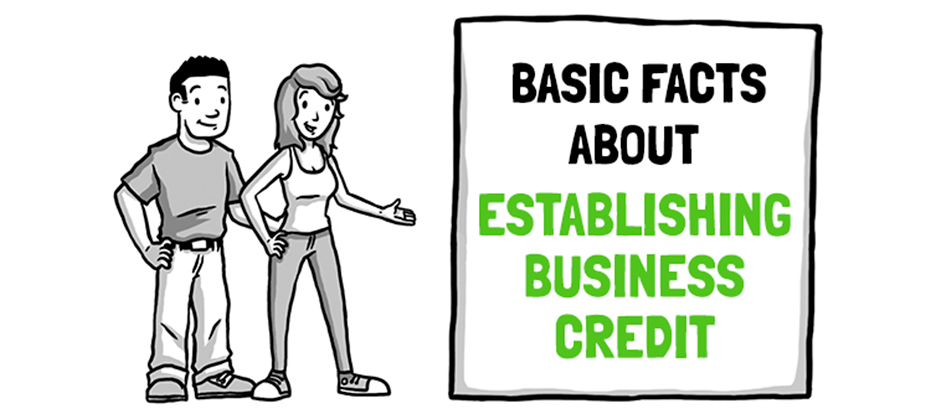
Building and maintaining a strong business credit report takes time, and good fiscal discipline, but many business owners don’t know where to start on their road to establishing business credit. Business credit reports less regulated than consumer credit Business scoring is much less regulated than consumer credit scoring. The process of scoring your business is much more complicated and less clear than the consumer scoring process. For example, additional factors that can impact business risk models include the number of years a business has been operating and its industry type. Don't assume you have a business credit score Just because you have a business, don't assume you have a business credit score. Credit bureaus require a minimum amount of information before they can generate a report and score for your business. To establish your business credit history, encourage your vendors to report your payment history to the business credit bureaus. Many credit bureaus can provide you with information on suppliers who report to them. Keep business credit and personal credit separate Next – let’s talk for a moment about separating your personal and business credit. To build strong business credit, don't rely on your personal credit rating to finance your business. If your business becomes at risk, so will your personal credit score. Keep in mind that many creditors are now looking at scoring tools that consider both personal and business credit to predict small business risk. Business credit reports available to the public It is not widely known that access to business credit scores and reports is not as restricted as personal credit reports. Business credit reports are available to the public, and anyone - including potential lenders and suppliers - can view your business credit report. This makes it imperative to monitor your business credit score and report in an ongoing manner. Also - You can proactively manage your business credit score. Ensure your vendors are reporting your business payment history, and monitor your business' credit on a regular basis. For more information on business credit resources, plus articles and tips on this subject, go to BusinessCreditFacts.com. Learn more about establishing business credit by viewing our series of Business Credit Facts videos.  Remember to subscribe to our channel for ongoing updates.
Published: November 3, 2017 by Gary Stockton

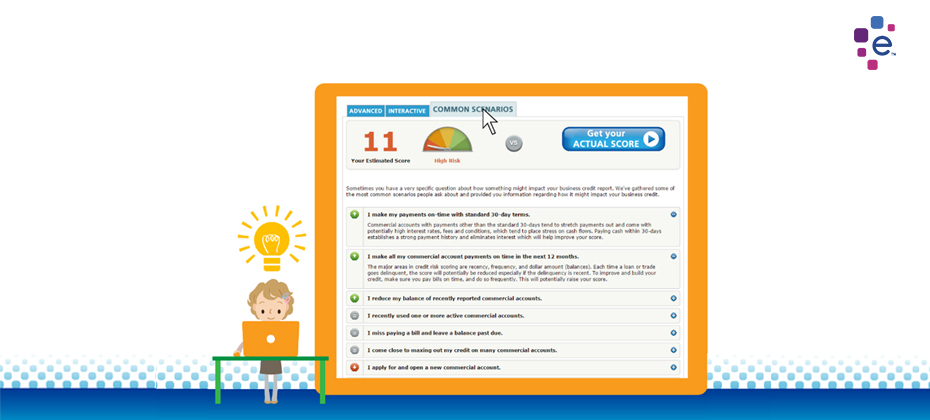
Experian has released a business credit score planner tool to help you run what-if scenarios. It helps you learn behaviors that build strong credit.
Published: October 19, 2017 by Gary Stockton

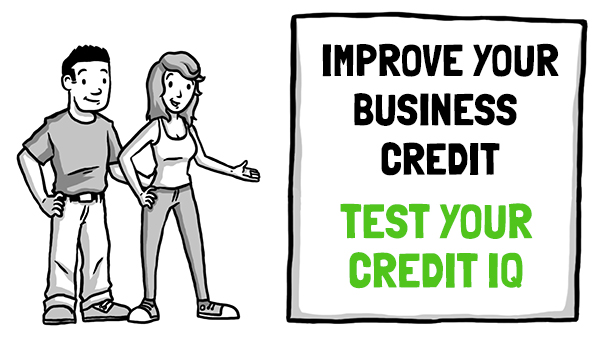
Business credit scores are vitally important to small businesses. In today’s competitive market, a faulty credit score can dramatically affect the bottom line of any business and can lead to higher interest rates, difficulty in securing loans, and potential problems with suppliers. Conversely, favorable credit history can serve as the linchpin to success. It not only can save a small-business owner a considerable amount of money, but it also can provide access to capital with which to grow the business. So, let’s do a quick review of some common business credit misconceptions. If I have a small business, I automatically have a small-business credit score. FALSE. If a business doesn’t have at least one tradeline and/or one demographic element (such as length of time the business has been credit active, how many employees, etc.), then a credit report and score are not generated. To establish a business credit score, you should ensure that your business vendors are reporting your payment history to the major credit reporting companies. This will help to build your commercial credit profile. There are no drawbacks to using my personal credit score, rather than a business credit score, when attempting to secure funding. FALSE. It’s true that many small-business owners fail to separate their business expenses from their personal expenses. However, the weakness of relying solely on personal credit is clear. If your business ever becomes at risk, your personal credit score becomes at risk as well. Anyone can request and view my business credit score. This is TRUE. Unlike personal credit reports, which are regulated and can be viewed only with the permission of the report holder, business credit reports are available to the public. This means that anyone — including potential lenders and suppliers — can openly view your business credit report. Given the public availability of business credit reports, it’s imperative to monitor your business credit score. There are things I can do to improve my business credit score. TRUE. It’s vitally important to be aware of possible inaccuracies or negative credit data on your credit file, should they exist. As the business owner, you may request that the credit reporting companies correct any mistakes to ensure that your credit file is accurate. By simply increasing your awareness of the factors that drive your current company credit score, you can begin to effectively manage your credit behavior. As always, the best thing that you can do is pay all financial obligations on time.  

Published: April 27, 2017 by Gary Stockton

Debt Collection Scams Substantial debt can be a crippling burden to a small business, which is why they are often targeted by con artists who purport they can vastly reduce or even eliminate this debt — for a fee. This type of scam has a long and checkered history — and is showing no sign of abating. In late October of 2016, Ukrainian-born Sergiy Bezrukov — aka John Butler aka Thomas Paris aka Christopher Riley — was arrested by the FBI in upstate New York and charged with mail fraud for having allegedly duped more than 100 small business owners out of more than $500,000. His alleged scheme was simple: mass-mail an offer to reduce small business debt by up to 75 percent in just six to 12 hours. The fee for his services — required upfront — was $1,250, to be sent via wire transfer to his company, Corporate Restructure, Inc. Of course, no actual services were performed. Victims were not only out their initial $1,250, but many had their credit ratings seriously damaged — or further damaged — as a result. “Bogus credit relief schemes are not all that common, but when they do pop up, they give legitimate organizations a bad name,” said Robert Tharnish, senior vice president of ABC-Amega, Inc., a debt collection agency headquartered in Buffalo, N.Y. “There are many ways to deal with commercial debt. Owners just have to do their due diligence.” Robert Ingold, CEO of Commercial Collection Corp. in Tonawanda, N.Y., agrees. “For anyone who receives a solicitation to reduce their debt — be it commercial or consumer — be skeptical. Know who you’re dealing with.” Both Tharnish and Ingold serve on the board of the International Association of Commercial Collectors, the world’s largest international trade association for commercial debt collection professionals. Ingold noted that most companies have accountants and attorneys who should immediately raise a red flag when such sketchy offers come their way. Even so, enough small business owners either don’t have outside help or ignore their paid experts’ advice, allowing scammers like Berzukov to rake in hundreds of thousands of dollars in just a few months’ time. Dealing with a bogus agency can damage already fragile credit ratings, Ingold noted. “In most cases, a company targeted by a debt reduction scammer has debt and delinquencies that have already been noted by reporting agencies like Experian. Bezrukov’s victims weren’t just out their $1,250, but they probably fell further behind in their debt payments expecting relief, and this just decreased their business credit scores even further.” “This is an industry where all you need is a phone and list,” Ingold continued. “We see the same problem on the flip side with fraudulent collection agencies. Fly-by-night collection agencies approach lenders with wild claims of collection prowess, or buy existing paper for pennies on the dollar, then start harassing debtors in violation of all established laws and ethics.” “ Both Ingold and Tharnish noted that the legal system has numerous avenues available for businesses that find themselves over their head in debt. These include: Restructuring the debt with the existing creditors. This often includes devising a monthly payment plan that leaves the business with enough capital to keep growing. Getting an SBA or private business loan. Declaring Chapter 11 or Chapter 13 bankruptcy, which allow businesses to discharge many of their obligations and still keep their doors open. Both experts also emphasized the need for business owners to perform due diligence before hiring any debt reduction or collection agency to work on their behalf. “Ask to see their license. Their certification. Check with the Better Business Bureau,” Tharnish advised. “Also demand references. Ask, ‘Have you done business with anyone I know?’ If an agency can’t provide references, just walk away.” “When confronted with an amazing business solicitation, just remember the old saying,” Tharnish concluded. “If it sounds too good to be true, it probably is.”
Published: November 21, 2016 by Gary Stockton

Follow Us!

Subscribe to our blog

Enter your name and email for the latest updates.

This site is protected by reCAPTCHA and the Google Privacy Policy and Terms of Service apply.

Get your business credit report now. Start by searching for your business.

Explore the Experian Small Business Index