
All posts by Kevin Dunn, Chief Revenue Officer

Healthcare organizations have invested heavily in digital engagement over the past decade. Patient portals. CRM platforms. Campaign automation. Consumer data platforms. And yet, personalization in healthcare still feels stuck. Outreach is often generic. Preventive care reminders go unopened. Screening campaigns underperform. Value based care programs struggle to engage the very patients they are designed to support. I hear a version of the same frustration from health system and life sciences leaders. Their engagement stack keeps expanding, but their impact on the patient experience remains limited. While many healthcare organizations have abundant data, most have an identity and context gap. Personalization stalls when identity never moves beyond the EHR A diagnosis tells you what care is needed, but it doesn't tell you how to reach someone, when they are most receptive, or what barriers might prevent follow-through. When identity stops at the electronic health record (EHR), engagement becomes a series of educated guesses about a real person’s needs, preferences, and circumstances. Patients don't live inside the EHR Consider how most preventive outreach works today. A patient leaves the hospital with instructions and a recommended follow-up appointment, and the system triggers a standard sequence of reminders. The intent is right. The execution is usually constrained by missing context. Will they see the message in the channel you chose? Is a caregiver involved in coordinating next steps? Is the barrier logistics, or clarity on what to do next? These factors determine whether follow-up happens. They also determine whether “personalization” actually feels personal, or just automated. In other industries, personalization advanced by connecting transactional data with behavioral and household context. In healthcare, those signals remain separate to protect patient data, often resulting in a disconnect between strong clinical insights and effective patient engagement. Connecting the dots is the hard part There's a common narrative that healthcare needs more data to improve personalization. In practice, the bigger challenge is connecting what you already have in a way teams can trust. Identity, preference, household context, and engagement history often live in different systems, and they rarely resolve cleanly to a usable profile. A privacy-safe identity foundation changes that. When organizations can link records across sources with strong match discipline, governance, and tokenization, they can turn fragmented data into more relevant decisions without exposing more than is necessary. Watch our Q&A with Cristin Liberatore from IQVIA Digital on healthcare marketing Download our 2026 State of advertising report Watch all Q&A videos with our partners How we approach this at Experian At Experian, this is the lens we use: Predict Build an AI-ready data foundation from first-party data, then enrich it responsibly so models and segmentation reflect patient and consumer context. Activate Reach people in the channels they actually use, using privacy-safe identity, tokenized activation, and governance that supports compliant engagement in regulated environments. Connect Keep identity consistent across channels, so communications feel relevant and coordinated, not repetitive or fragmented, while maintaining compliance in a tokenized or de-identified fashion. Prove Tie engagement back to meaningful outcomes using our identity spine, so teams can learn what reduces friction and improves follow-through. What privacy-safe identity makes possible in regulated patient engagement In regulated categories, accuracy, governance, and privacy are non-negotiable. That’s why I push teams to think about identity as infrastructure, because people move, households change, and preferences shift. At Experian, that infrastructure includes: Marketing Attributes and Enrichment: Adding context to first-party data so planning and decisioning reflect the person you’re trying to reach. Offline and Digital Graphs: Connect identity across touchpoints so experiences stay consistent as people move between channels. First-Party Onboarding and data marketplace: Activate consented consumer and patient data across digital environments in a privacy-safe way. Our data marketplace extends that strategy with third-party partner segments, improving your personalization efforts to encourage a more proactive approach to healthcare. Curated Deals: Support upper-funnel awareness by aligning audience insight with higher-quality inventory in environments that can improve visibility, context, and campaign efficiency. Watch our healthcare marketing panel from CES 2026 Identity must come first in healthcare marketing Healthcare personalization has plateaued because engagement strategies have stayed too narrow and disconnected from the realities that shape follow-through. The next phase of healthcare engagement will be defined by organizations that treat identity and additional patient context as the foundation for decisioning, activation, and measurement. When identity connects to real-world context through privacy-safe, governed, and tokenized practices, outreach becomes more relevant, easier to receive, and easier to act on. About the author Kevin Dunn Chief Revenue Officer, Experian Kevin Dunn joins Experian Marketing Services with more than 20 years of leadership experience across marketing and advertising technology, most recently serving as Senior Vice President of Brands and Agencies at LiveRamp. In that role, he led growth across retail, CPG, travel, hospitality, financial services, and healthcare, overseeing new business, account expansion, and channel partnerships. Kevin is known for building cohesive, accountable teams and leading with optimism, clarity, and a strong sense of shared purpose. His leadership philosophy centers on empowering people, driving positive outcomes for clients and fostering a culture where teams can grow, take smart risks, and succeed together. Latest posts

Commerce media networks have had a strong start. Growth has been fast, demand has been strong, and brands have made it clear they want closer access to commerce-driven audiences. But as more networks mature and enter the space, many are starting to feel the same pressure point: scale. Most commerce media networks were built as managed service businesses. That model works well early on. High-touch, white-glove partnerships make sense when you’re working with a handful of strategic brands. But there’s a ceiling. There are only so many teams, only so much inventory, and only so many advertisers that model can realistically support. It’s one thing for a large retailer to build custom programs for a P&G. It’s another to do that at scale for hundreds or thousands of brands. At some point, growth slows, not because demand disappears, but because the model can’t stretch any further. The scale problem no one likes to talk about That’s where many commerce media leaders find themselves today. Pausing to assess what comes next. For a long time, growth has been measured almost entirely through media dollars. That mindset is understandable. Media is familiar, it's easy to quantify. It shows up clearly in negotiations and revenue reports. But viewing commerce media networks purely as media sales engines creates long-term risk. It can strain brand relationships, limit innovation, and distract from what commerce media networks actually do better than almost anyone else: understand consumers deeply. Signals are the real asset Commerce platforms sit close to decision-making. They see what people search for, what they consider, what they buy, and when those behaviors change. Those signals are incredibly powerful. And yet, most networks only activate them inside their own walled environments. That’s a missed opportunity. Curation represents the next area of growth for commerce media networks, and it doesn’t require replacing or diminishing existing media revenue. In fact, it complements it. No single commerce media network has all the data needed to give advertisers the scale and reach they're looking for. And no advertiser wants to recreate the same audience in dozens of disconnected platforms. That friction creates inefficiency and slows decision-making. Why collaboration supports sustainable growth The opportunity is to look beyond first-party data alone and start thinking about collaboration. Second-party data. Data partnerships. Signal sharing done responsibly and transparently. Imagine an advertiser defining an audience once and being able to understand and reach that audience across multiple commerce environments. Not through a series of disconnected buys, but through a more consistent approach built on shared understanding leading to increased reach and more impactful campaigns. That’s easier for advertisers to manage, and it creates an additional revenue stream for commerce media networks that complements media sales rather than competing with them. Curation strengthens media, it doesn't replace it Media will always play an important role. There is clear value in custom experiences tied directly to a commerce environment. Think buyouts, sponsored experiences, custom creative integrations. Those are situations where brands want to work closely with the network itself. But the signals commerce media networks hold don’t need to be limited to those moments. Those signals can be monetized independently through data products, co-ops, and partnerships that extend their value into other channels. That’s how curation adds value without undercutting existing revenue. A practical path forward for commerce media leaders For commerce media leaders thinking about their next phase of growth, the focus should be on sustainability. Building a massive media operation takes time and investment. Data-driven revenue streams can be introduced more quickly, require fewer internal resources, and provide steadier margins. It’s a practical approach. Use signal-based revenue to fund growth. Let that revenue support investment in tooling, talent, and media innovation over time. Bootstrapping, in the truest sense. Why transparency matters early There’s also a broader responsibility here. In many advertising channels, transparency followed growth, often after pressure from the market. Commerce media networks have an opportunity to do this differently. To lead with transparency from the start. To be clear with brands and consumers about how data is used, how signals are created, and how value flows through the ecosystem. Because the reality is this: commerce media networks are holding some of the most valuable intent signals in the market today. But those signals don’t retain their value in isolation. If they aren’t enhanced, combined, and made accessible in the right ways, someone else will step in to do it. And when that happens, control shifts away from the source. The bottom line The next chapter of commerce media isn’t just about selling more media alone. It’s about recognizing the value of the signals already in hand, working together to make them more useful, and building additional revenue streams that support long-term growth. That’s how commerce media networks grow without eating their own lunch. About the author Kevin Dunn Chief Revenue Officer, Experian Kevin Dunn joins Experian Marketing Services with more than 20 years of leadership experience across marketing and advertising technology, most recently serving as Senior Vice President of Brands and Agencies at LiveRamp. In that role, he led growth across retail, CPG, travel, hospitality, financial services, and healthcare, overseeing new business, account expansion, and channel partnerships. Kevin is known for building cohesive, accountable teams and leading with optimism, clarity, and a strong sense of shared purpose. His leadership philosophy centers on empowering people, driving positive outcomes for clients and fostering a culture where teams can grow, take smart risks, and succeed together. Latest posts
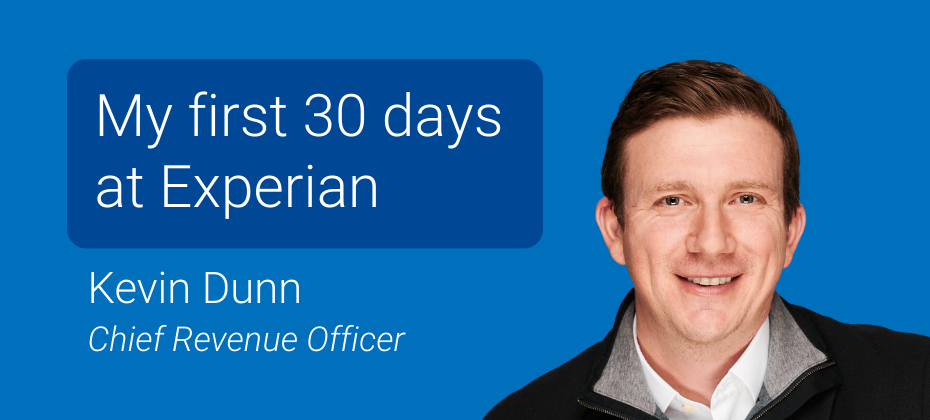
I’ve officially been at Experian Marketing Services for one month. That’s long enough to get past the onboarding checklists, meet an incredible number of people, and start connecting the dots between what I believed from the outside and what I now see clearly from the inside. What’s surprised me most is not the scale of Experian's assets. Everyone knows Experian operates at massive scale. It’s the uniqueness of how those assets come together. Identity. Activation. Curation. Optimization. Measurement. And a culture that understands the responsibility that comes with being the identity and data backbone for the AdTech ecosystem. There’s real energy here around not just what’s possible, but how to do it the right way. Very early on, this felt like the right move. The people confirmed it immediately. The leadership team reinforced it just as quickly. There’s alignment around how we go to market, how we think about identity, and how seriously we take client trust. That matters, especially in a moment when marketers are being asked to do more with less, prove everything, and still protect the consumer at every turn. The reality marketers are facing right now I’ve spent my career working with brands and agencies navigating change. What’s different right now is the level of fragmentation. Signals are everywhere. They’re coming from transactions, media exposure, location, content consumption, commerce, and increasingly from AI-driven interactions that don’t follow traditional linear paths. The challenge is no longer access to data. It’s coherence. If I’m a marketer today, my core question is simple: How do I tie a durable identity structure to constantly evolving consumer signals, and feed that intelligence into the right places at the right time? Especially as I start interacting with AI buying agents that will make decisions on my behalf. If the signals those systems receive are noisy, incomplete, or misaligned with my brand, I lose control fast. Identity has to be the foundation That’s where identity stops being a background capability and becomes foundational. Without a strong, continuously refreshed identity framework, everything downstream breaks. Planning becomes guesswork. Activation becomes inefficient. Measurement becomes misleading. I see too many brands treating identity as a one-time project. Build a graph. Do some householding. Declare victory. But people change. Households change. Signals multiply. Identity has to evolve just as fast. One of the biggest misconceptions I walked into was how narrowly Experian is often viewed. Many marketers still think of us as a place to buy attributes. Full stop. What I see now is a connected system that supports the full marketing lifecycle: Audience creation Activation Curation Optimization Measurement All grounded in identity and executed in a way that’s measurable and privacy-forward. Audigent + Experian’s data marketplace. This is where things click. This becomes even more powerful when you layer in Audigent. Audigent was foundational in defining curation, the idea that it’s not just about having data or inventory, but about intentionally pairing the right audience signals with the right supply to drive outcomes. When you combine Audigent’s curation expertise with Experian’s identity, data, and marketplace capabilities, something meaningful happens. That same philosophy extends directly into our data marketplace. It’s not just about accessing unique data sets. It’s about safely combining Experian data with partner data, or even multiple partner data sets together, to create audiences that simply don’t exist anywhere else. Then tying those audiences to real-world exposure and conversion across online and offline environments. This matters across industries, but especially in two places: Regulated verticals like healthcare and financial services, where accuracy and privacy are non-negotiable. Industries sitting on valuable first-party data like retail, travel, and automotive. No single company has all the signals they need. The opportunity is in collaboration. Partnering data in a trusted environment to create better outcomes and, in many cases, entirely new revenue streams. Looking ahead As AI continues to reshape how media is planned and bought, signals will become the currency. Not just any signals. The right ones. Curated, contextual, and connected to identity in a way that reflects real consumer behavior. Marketers who win will be the ones who control that signal flow, rather than reacting to it. After one month, what excites me most is that Experian is built for this moment. Years of investment in identity. A data marketplace designed for collaboration. And teams who understand that our job is not just to help marketers reach people, but to help them do it responsibly, efficiently, and in a way that actually drives outcomes. We’re just getting started. About the author Kevin Dunn Chief Revenue Officer, Experian Kevin Dunn joins Experian Marketing Services with more than 20 years of leadership experience across marketing and advertising technology, most recently serving as Senior Vice President of Brands and Agencies at LiveRamp. In that role, he led growth across retail, CPG, travel, hospitality, financial services, and healthcare, overseeing new business, account expansion, and channel partnerships. Kevin is known for building cohesive, accountable teams and leading with optimism, clarity, and a strong sense of shared purpose. His leadership philosophy centers on empowering people, driving positive outcomes for clients and fostering a culture where teams can grow, take smart risks, and succeed together. Latest posts